My Ordinary Voice

Featured

Getting in the Arena

I’m starting a blog, y’all. I am getting into the blogging arena as a cyber savvy Teddy Roosevelt would say. I’m not going to give in to over-thinking it as I’m prone to do. I’m just doing it.
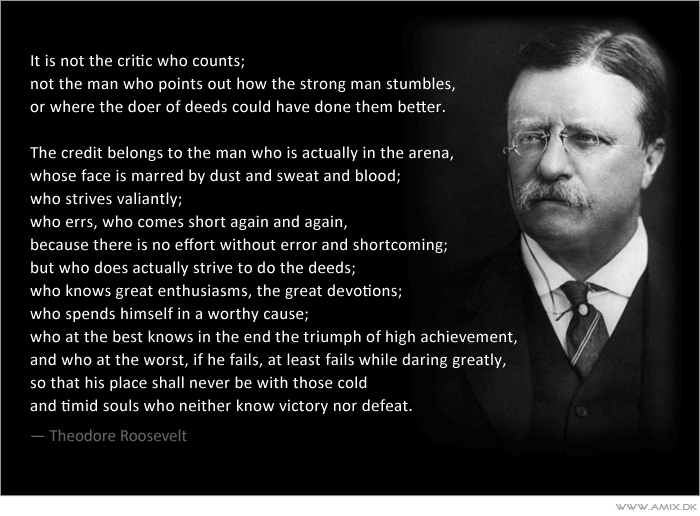
This quote was one of my dad's favorites and hung in his office.  C.W. had no problem jumping into the arena.  But me, not so much.

This quote was one of my dad’s favorites and hung in his office. C.W. had no problem jumping into the arena. But me, not so much.

So what does an ordinary average person like myself have to say and blog about? I’m in that mid stage of life that entails raising two busy teenage children with my very great hubby Russ, maintaining a household, folding clothes, making lunches, chauffeuring, dealing with my life as a new “orphaned” adult, folding more clothes, trying to cook nutritious tasty meals and volunteering for various projects. But one project as the conservation chair and national affairs representative for my garden club really struck a chord – and I have unearthed a passion for conservation, our environment and especially our National Parks. I am a new board member for the National Parks Conservation Association (NPCA) ~ a private, non-profit, non-partisan advocacy organization for our National Parks founded in 1919.  I get to attend meetings in some amazing places and learn about our invaluable inheritance we all have as Americans…and I want to share it with you. As my friend Heather has said, “the older you get, the more like yourself you become”. I think our inner voice just gets louder and you have to let it out and share what’s good. So read it or not. Here goes friends…..

As I was traveling recently, I was asked, “so Elizabeth, what is your area of expertise?” I sort of laughed under my breath and responded, “that’s a really good question.” Reflecting on this exchange, I realized that I’ve started to find my area of expertise and it’s using my voice, my plain average ordinary voice to educate and advocate about what I find important in this life.

So my ordinary self gets to learn and experience this promised inheritance we all have in this great country and I want to share my journey of learning with you and convey why conserving and enhancing our National Parks, public lands and natural spaces is important and why we should care…..And in the process, maybe you will use your ordinary voice to advocate for what you think is important.   SO…. come along with me and discover or re-discover our national monuments, preserves, grand national parks across the country or right here in our own Texas back yard. Let’s celebrate, protect and preserve them for us and for future generations.

To waste, to destroy our natural resources, to skin and exhaust the land instead of using it so as to increase its usefulness, will result in undermining in the days of our children the very prosperity which we ought by right to hand down to them amplified and developed.

― Theodore Roosevelt

So you just read an inspiring quote…..now watch this inspiring short video. Yes, right now. Don’t scroll down just yet; you will miss something worth seeing. It’ll be your feel good moment for the day:

http://vimeo.com/64744978

I don’t know of anything so unifying as our National Parks. They are celebrated and loved by Republicans, Democrats, Independents, and folks of all income levels and backgrounds. They tell our story as Americans, act as economic engines for our communities, creating jobs and supporting families in cities and towns across the country, and they connect us to some majestic open spaces where we can go to find inspiration and peace and sanity in our hurried lives.

We hear everyday what is wrong with our country ~ especially from politicians trying to get elected or conform to a certain ideology. But let’s focus on and celebrate what is so right about this great country and the forethought it took to establish a National Park System almost 100 years ago for us today and our future generations.

If you’re still with me take a look at my photos from recent meetings this summer and fall:
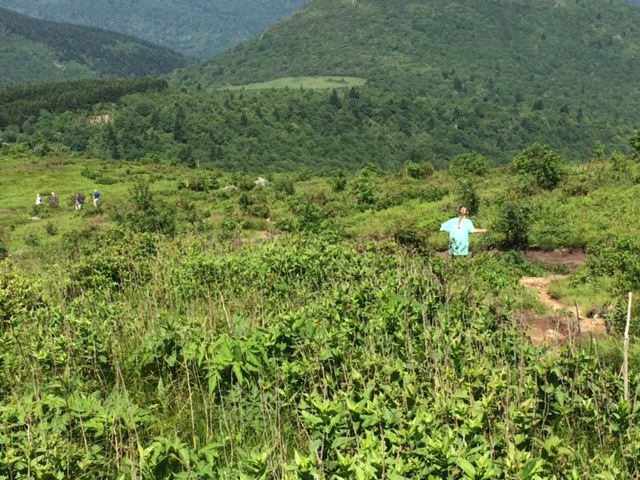
The Great Smoky Mountains 

Hiking through the Blue Ridge Parkway at the Black Balsam Area of the Pisgah National Forest in North Carolina where treeless stretches at 5000-6000 elevation allow for miles of paramic views of the Blue Ridge Mountains.

Hiking through the Blue Ridge Parkway at the Black Balsam Area of the Pisgah National Forest in North Carolina where treeless stretches at 5000-6000 elevation allow for miles of panoramic views of the Blue Ridge Mountains.

The Blue Ridge Parkway is many things. It is the longest road planned as a single unit in the United States. It is an elongated park, protecting significant mountain landscapes far beyond the shoulders of the road itself. It is a series of parks providing the visitor access to high mountain passes, a continuous series of panoramic views, the boundaries of its limited right-of-way rarely apparent and miles of the adjacent countryside seemingly a part of the protected scene. It is a “museum of the managed American countryside,” preserving the roughhewn log cabin of the mountain pioneer, the summer home of a textile magnate, and traces of early industries such as logging, railways, and an old canal. It is the product of a series of major public works projects which provided a boost to the travel and tourism industry and helped the Appalachian region climb out the depths of the Great Depression. Stretching almost 500 miles along the crest of the Blue Ridge mountains through North Carolina and Virginia, it encompasses some of the oldest settlements of both pre-historic and early European settlement. The Blue Ridge Parkway is all these things and more. (Source: NPS.gov)
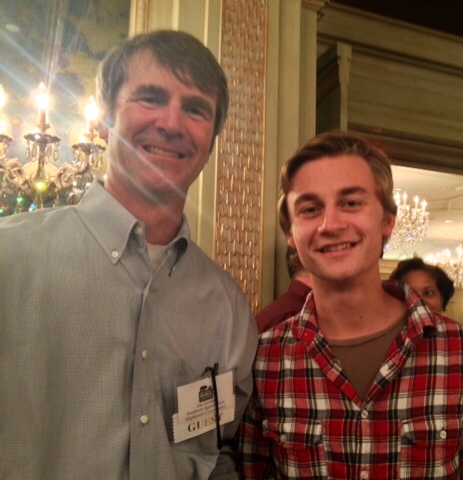
This is Thomas with author Jay Leutze who wrote an incredible true story of people using their ordinary voices to save their community near the Appalachian Trail.
This is Thomas with author Jay Leutze who wrote an incredible true story of people using their ordinary voices to save their community near the Appalachian Trail.

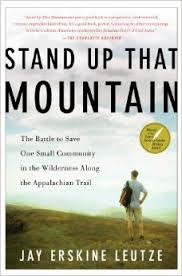
And here's the book.  You can order on Amazon.

And here’s the book. You can order on Amazon.

Breathtaking Glacier National Park in Montana
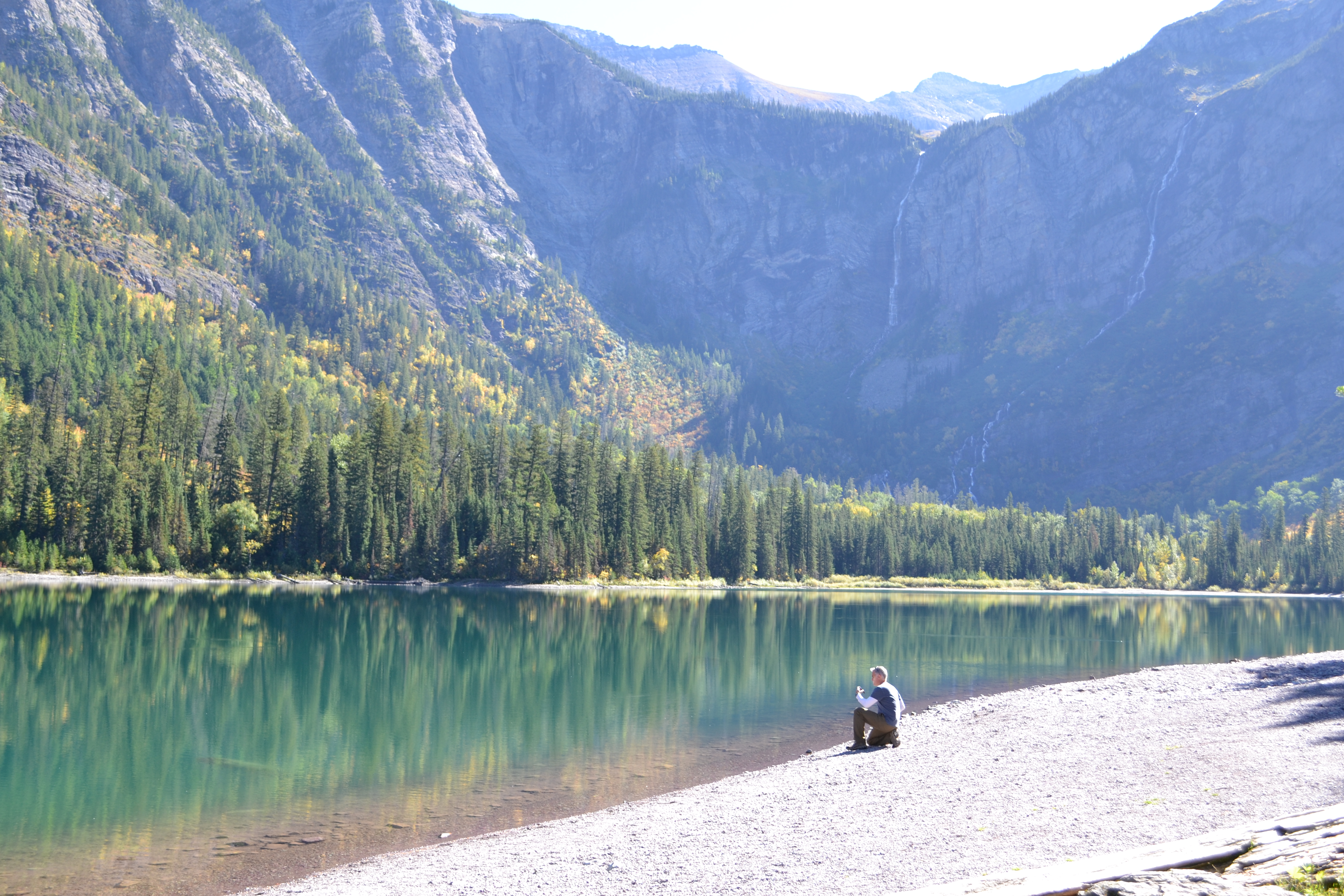
Russ feeling small in Glacier National Park this September

Russ feeling small in Glacier National Park this September

Throughout time, people have sought out Glacier National Park’s rugged peaks, clear waters, and glacial-carved valleys; its landscape giving both desired resources and inspiration to those persistent enough to venture through it. 

The park encompasses over 1 million acres and includes parts of two mountain ranges, over 130 named lakes, more than 1,000 different species of plants, and hundreds of species of animals. This vast pristine ecosystem is the centerpiece of what has been referred to as the “Crown of the Continent Ecosystem”, a region of protected land encompassing 16,000 square miles.  Glacier NP borders Waterton Lakes National Park in Canada—the two parks are known as the Waterton-Glacier International Peace Park and were designated as the world’s first International Peace Park in 1932. (Source: NPCA.com and Wikipedia)

The glaciers have significantly diminished over the last century.  Click on the link below for a visual.

http://nrmsc.usgs.gov/repeatphoto/
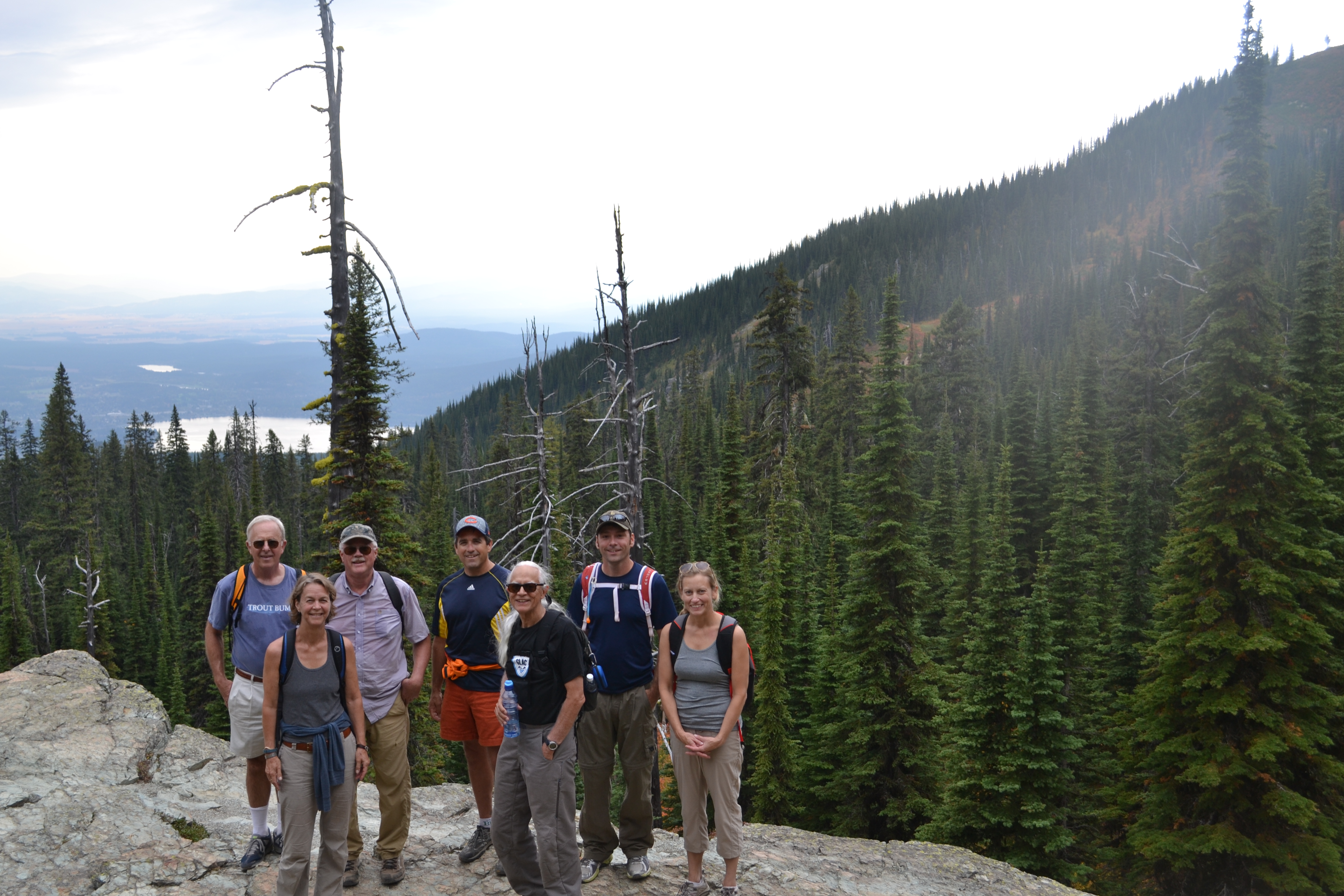
Some of my new friends on our group hike on The Big Mountain Summit Hike with transboundary views of Glacier National Park, and the Canadian Rockies.  I was trying real hard not to be a wimp!

Some of my new friends on our group hike on The Big Mountain Summit Hike with transboundary views of Glacier National Park, and the Canadian Rockies. I was trying real hard not to be a wimp!

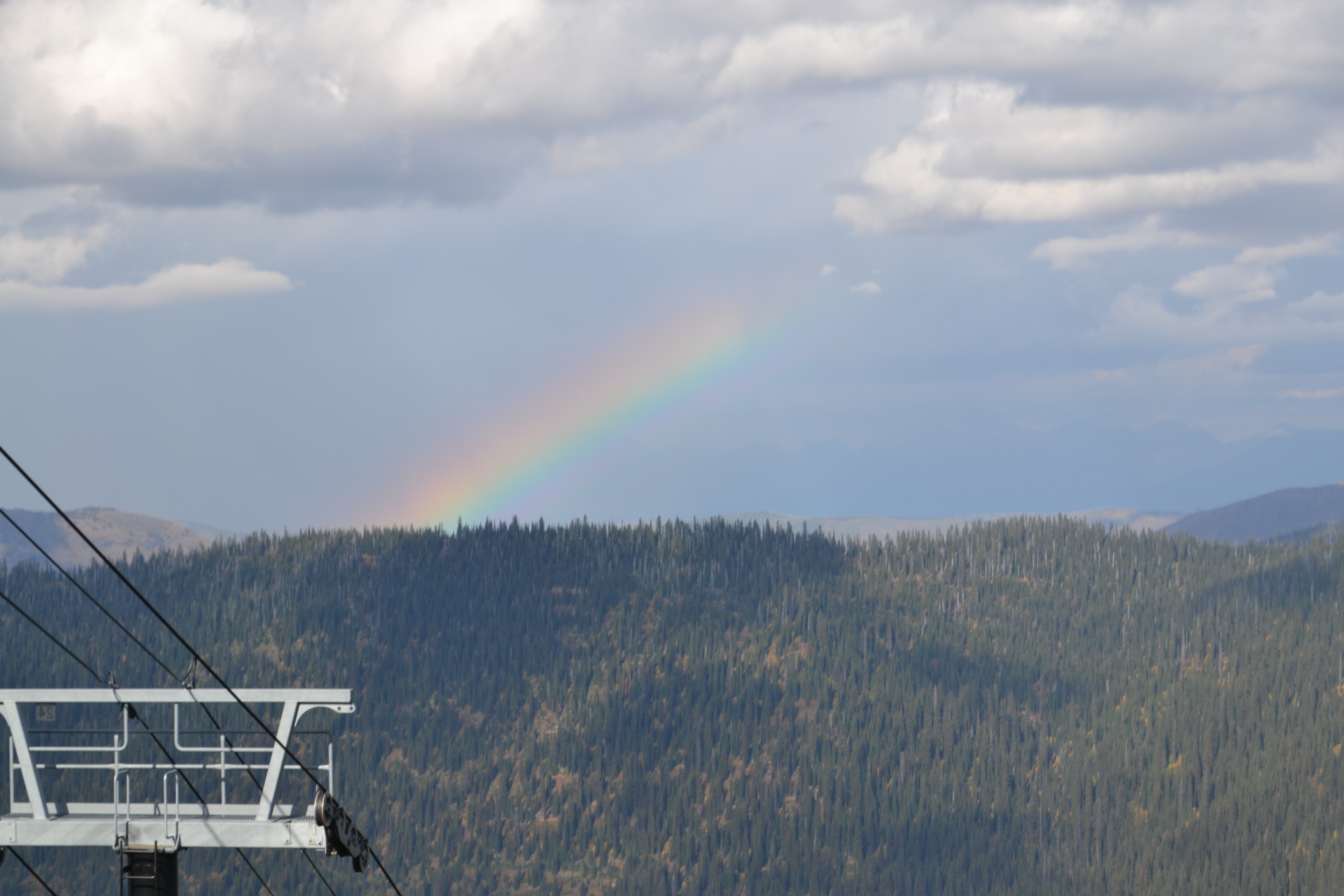
And look what was waiting for us at the top…
DSC_4244

One evening we heard a discussion and presentation on a beautiful new large format photography book called The Crown of the Continent: The Wildest Rockies. One of the co-authors and NPCA Crown of the Continent Program Manager Michael Jamison joined us on the hike shown above.

Take a look at this short video about the book and order a copy if you wish:

A Quote that really says it all in the book:

Guard, protect, and cherish your land, for there is no afterlife for a place that started out as Heaven.

– C.M. Russell

America’s Best Idea ~ A bit of history

In a nutshell…..

The National Park Service (NPS) is an agency of the United States federal government that manages all U.S. national parks, many American national monuments, and other conservation and historical properties with various title designations. The NPS was created on August 25, 1916, by Congress through the National Park Service Organic Act. Not to be confused with the Antiquities Act of 1906 signed by Theodore Roosevelt which gives the President of the United States the authority to, by presidential proclamation, restrict the use of particular public land owned by the federal government. The Organic Act has been used over a hundred times since its passage and is an important conservation tool.

Our National Park Service is an agency of the United States Department of the Interior. Most of the direct management of the NPS is delegated by the Secretary of the Interior, Sally Jewell, to the National Park Service Director, John Jarvis, who must be confirmed by the Senate.

The 21,989 employees of the NPS oversee 401 units. Here’s a breakdown of all the National Park Service units and the ones we have here in Texas:

In addition, there are also park units around found outside of Texas in the U.S. that include a National Historic Site, National Battlefields, Military Parks, a National Battlefield, National Lakeshores, National Rivers, National reserves and National Parkways.

Total in Texas – 14 and growing

Exciting developments in Texas: 

A possible new park designation for a Waco Mammoth National Monument:

http://www.wacotrib.com/news/city_of_waco/white-house-to-hear-waco-mammoth-site-proposal-this-fall/article_4ec2aaa2-dbd7-55cd-9bf6-4cc21ed6347d.html​

And here is a recent article about the Proposed Lone Star Coastal National Recreation Area:
http://www.houstonchronicle.com/neighborhood/bayarea/news/article/Coastal-recreation-area-edges-closer-to-reality-5706861.php?cmpid=email-premium&t=52917f40516949123c

So this blogging stage has been set for future subjects regarding our parks.  If you’re free this Saturday, October 11, The Big Thicket is celebrating the 40th anniversary of the preserve and the 50th anniversary of the Big Thicket Association with speakers (one being world renowned photographer Keith Carter), dancers, crafts, and all sorts of celebratory fun at the visitor’s center.   I’ll be manning the NPCA table so come by and get a prize.

If you have made it to the end of this post you are a true friend and I hope you learned something.  I sure did writing it!

Hamilton, Dorothy, and The Everglades ~ A Perfect Storm of Inspiration…

Tags

When the parks and theater come together ~

It’s funny how events connect from different parts of your life and come together in unexpected ways.

So what does a trip to the Florida Everglades, a new friendship with Dorothy, a highly successful biophysicist, and the Broadway smash hit Hamilton have in common? And how has this string of events in the last two months inspired me to write a blog post about an issue facing one of our national parks? Are you dying to know?! Well, I’m going to tell you anyway.

As you may know, I’m a big fan of national parks / public lands and musical theater. Maybe one day the Beaumont Community Players will let me produce: “Park Ranger…The Musical!”. Just picture park rangers tap-hiking while singing about The Appalachian Trail or the biodiversity of The Big Thicket and The Big Cypress National Preserves. Theodore Roosevelt could sing a number called “Antiquities Act” with the Grand Canyon chorus, Woodrow Wilson could do a dramatic interpretation of the signing of “The Organic Act of 1916” that created the National Park Service, and the opening number could be a big Rogers and Hammerstein-style song and dance tribute to our first national park, “Yellowstone”.

Ok enough of that….for now 🙂

I am very grateful to be able to visit national parks and buy theater tickets. On a recent NPCA winter trip to the Everglades National Park with my dear friend Heather, we were asked to give a ride from the airport to a very interesting, savvy, and smart park advocate named Dorothy. One of the best things about my new association with conservation groups such as NPCA is that I’m inspired by people who care passionately about preserving wild, beautiful, historic places – landscapes and public lands that benefit all Americans. Dorothy is one of those inspiring and big picture people. I know Heather, Dorothy and I will be friends for life.

IMG_6770

The Three “Alligateers”!


IMG_4545

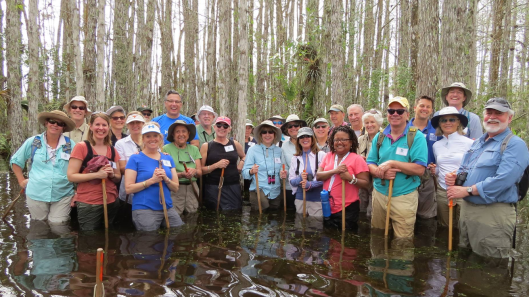
Swamp Hiking in Big Cypress National Preserve with friends from the National Park Conservation Association

IMG_3304

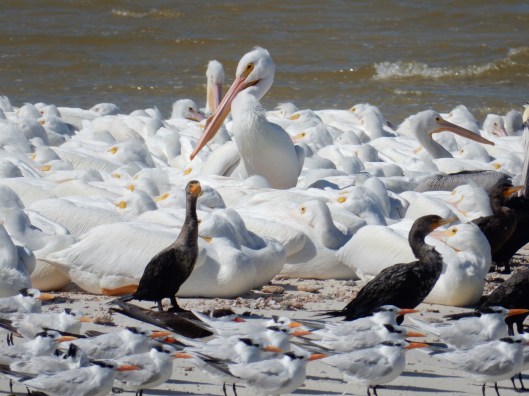
Birds at 10,000 islands at Everglades National Park


Heather and I spent time with Dorothy driving to and from the Fort Myers airport, swamp hiking and boating through the Everglades. In conversations over meals and informal group meetings about latest park news, Dorothy passionately educated us on a personal level about an issue facing Colonial National Historical Park which contains several sites of critical importance in the history of America. Historic Jamestown is where the story of Captain John Smith and Pocahontas actually happened, and where the roots of American government first took hold. Yorktown Battlefield was the site of the Colonial victory over British forces in the American Revolution that would lead to official American independence two years later, and where visitors can still view some of the original earthworks constructed by George Washington’s troops. These two sites are linked together by the 23-mile long scenic Colonial Parkway, specifically designed to limit the impacts of the roadway on the surrounding landscape.

I’ll get back to the aforementioned issue in a minute.

Fast forward 6 weeks. I had the opportunity to see the Broadway musical theater phenomenon – Hamilton! Lin-Manuel Miranda’s brilliant show celebrates the life of a founding father who galvanized, inspired and shaped our newborn nation. It is based on the New York Times bestselling biography of Alexander Hamilton by Pulitzer prize-winning author, Ron Chernow. History comes alive in poetic hip-hop R&B along with some 60’s-influenced music. It’s a history sensation that has fans obsessed. You will want to learn every single biographical historical word. And if you haven’t heard any of the music yet, for the love of God download some immediately! Here’s a clip in the meantime:


Miranda’s artistry communicated the uniquely special and miraculous idea of the reality of freedom and our early American experience. I take for granted this fateful happenstance that these brilliant people, our founding fathers, came together and created the birth of our nation and laid strong foundations of democracy. Hamilton, an immigrant born on the Caribbean island of Nevis, created and implemented a national banking system that is our Treasury department, authored most of the Federalists Papers, founded the Coast Guard and The New York Post, and is now a Broadway Star teaching and re-teaching audiences about our important American history in a very original way.

Snap along to the words below:

“How does a rag tag, volunteer army in need of a shower,                                             

somehow defeat a global superpower?”                                                                                         

How do we emerge victorious from the quagmire?                                                                    

From the battlefield raising Betsy Ross’ flag higher?”

In Hamilton, the battle of Yorktown is depicted in a song called “Yorktown (The World Turned Upside Down)”, and emotionally captivates the audience and reminds us with clever prose the important meaning of this battle in 1781.

For three days, the Continental and French armies pounded the British lines non-stop. On the night of October 11, Washington’s men began work on a siege trench, just 250 yards from the British lines. Progress on this work could not continue due to British fortifications, Redoubts #9 and #10, which prevented the line from reaching the river. Assault on Redoubt #10 was assigned to, you guessed it – Alexander Hamilton.

Washington’s tactics, as well as the actions of Hamilton, Lafayette, and Laurens, led to a full surrender by British Lt. General, Lord Cornwallis. The title refers to the song played by British bands as they marched out of town following Cornwallis’ surrender.

The lyrics describe what happened after the battle:

HamiltonWe negotiate the terms of surrender                                                                            

I see George Washington smile   

We escort their men out of Yorktown    

They stagger home single file

Tens of thousands of people flood the streets 

There are screams and church bells ringing

And as our fallen foes retreat                                                                                                                    

I hear the drinking song they’re singing…

All:  The World turned upside down

Take a listen:

https://youtu.be/NpsuEcKW8ZE

Sitting in the Richard Rogers theater, I watched, listened and digested these historic American experiences communicated to me through Miranda’s artful genius.  I felt emotionally invested as it punctuated the issue Dorothy discussed with us on that February trip to the Everglades on another level. I am proud that we have a national park that tells this miraculous story on the site where this history actually happened, and I’m motivated to preserve it in my own small way.

We can visit Colonial National Historical Park and see the same landscape as Hamilton did as he commanded troops in the battle of Yorktown. Although we may not have been ‘in the room where it happened’ (that’s another great Hamilton song) or anywhere near the space and time continuum where it all happened – we can see the “view” where it happened…

Unless it is impeded by this:

The Issue:

Dominion Virginia Power has a plan to build 17 giant towers across the scenic James River known as the Dominion Surry-Skiffes Creek Whealton Transmission Line. As National Park Service Director Jonathan Jarvis states in his letter about his concerns for the project to Lt General Thomas P. Bostick, US Army Corps of Engineers, “Running power lines through the landscape where the earliest days of American history were written will forever change the ability of Americans to experience and understand our nation’s earliest days”. In addition, Director Jarvis points out the following in his letter:

  • It would be a massive and modern intrusion in a landscape that retains the feeling and appearance of that historical time.
  • It would cross directly over the open water route of the Captain John Smith Chesapeake National Historic Trail.
  • It would be within sight of Jamestown Island and the Colonial Parkway.
  • It would set a precedent for additional development and cumulative effects.
  • It would forever degrade, damage, and destroy the historic setting of these iconic resources.
  • This is not acceptable for resourses designated by Congress to ensure their permanent protection.
  • The NPS is working with state and local organizations to get the Jamestown Island placed as a significant site on the list maintained by UNESCO – the first step to designation as a World Heritage site that attracts millions of visitors from around the world.
  • It is a setting that has survived intact for over 400 years.

In addition, Dorothy reminded me of the following:

  • Dominion did not significantly take into account energy efficiency measures or renewable energy initiatives in its 2011 analysis to support the project.
  • In a recent study of 32 US public utility companies entitled “Benchmarking Clean Energy Deployment: 2014,” Dominion ranked 30, 31 and 32 on three parameters related to renewable energy and energy efficiency.

Endangered Species

Dominion’s project not only threatens the integrity of Jamestown, Yorktown and the John Smith National Historic Trail it could also harm the spawning grounds of the Atlantic sturgeon, an endangered species that can be traced back to the time of dinosaurs, and the habitat of other animals and plants including bald eagles, northern long-eared bats, and a rare orchid known as the small whorled pogonia.

Economic Impact

The project would possibly affect some of the economic benefits that this historic site provides to Virginia’s $22 billion tourism industry with one billion dollars generated by tourism in the Historic Triangle – the three corners being Jamestown, Colonial Williamsburg, and Yorktown.

The Project

As I mentioned, Dominion wants to construct 17 massive electric transmission towers across the James River over the Captain John Smith Historic Trail, as well as 27 additional towers throughout the landscape. A number of these towers are as tall as the Statue of Liberty!

Dominion claims that building these new transmission towers across the James River at the selected location is the only way to provide the necessary power to the Hampton Roads area without having rolling blackouts after the company closes a local coal-burning power plant that will soon be in violation of EPA pollution standards.

The report Dominion is using is outdated. Their proposal is based on electricity use on hot summer days growing 1.9% each year but actual electricity use on hot summer days dropped in 2012, 2013, and 2014. Also, actual electricity use by the area’s military sites dropped 9.8% from FY11-FY14.

Let me say that this is not about being anti-business, it’s about smart, thoughtful business.  Let’s not ‘throw away our shot’ (another Hamilton song) to preserve the view shed of this historic place for our future generations.

https://youtu.be/VK4Wk_8PbcI

So if you have read this far and are so inclined here’s what you can do:

Please urge the Army Corps of Engineers to oppose the project.

You can use the information in this blog to do so.

Please address your individual or group letters to:

Lt. General Thomas P. Bostick
US Army Chief of Engineers and Commanding General
US Army Corps of Engineers
441 G Street, NW
Washington, DC 20314-1000

Also, please reach out to your representatives and ask them to push the Corps to oppose the project.

~~~~~~~~~~~~~~~~~~~~~~~~~~~~~~~~~~~

It’s really something special to look back at what you think are unconnected events and see the message.  Thank you Hamilton, thank you National Park Service and thank you Dorothy for bringing the two together to make us aware and inspire action in an everyday ordinary way.

A quote from another person who inspires me… Audrey Peterman, author of the book Our True Nature and just sums it all up:

One of the most gratifying things of all is that when I tour some of the places where my ancestors lived or where pivotal events took place, the natural world connects me to the people and the times. Trees that they touched and probably nurtured are still standing, and in many cases I can look out at the same view that they saw and give thanks to all who had a hand in saving it for me.

Oh and Happy Easter from the Hamilton Peeps. Thanks to Eve another Hamilton enthusiast for sending me this:


FullSizeRender(3)

courtesy of mashable.com


Missions and Mammoths in The Lone Star State

What could Mammoths that roamed the earth 65,000 years ago and Spanish Missions in the New World possibly have in common? How could these two vastly different historical events both make news literally days apart?

As a Texan, it is exciting that two national park units in my state recently made big news: The San Antonio Missions National Historical Park and the newly designated Waco Mammoth National Monument. They are both important stories that add to our rich history of our land and our people that are being preserved globally and nationally. These two separate and important events were recognized on a national and global level this July and both celebrated with ceremonies just days ago.

Missions

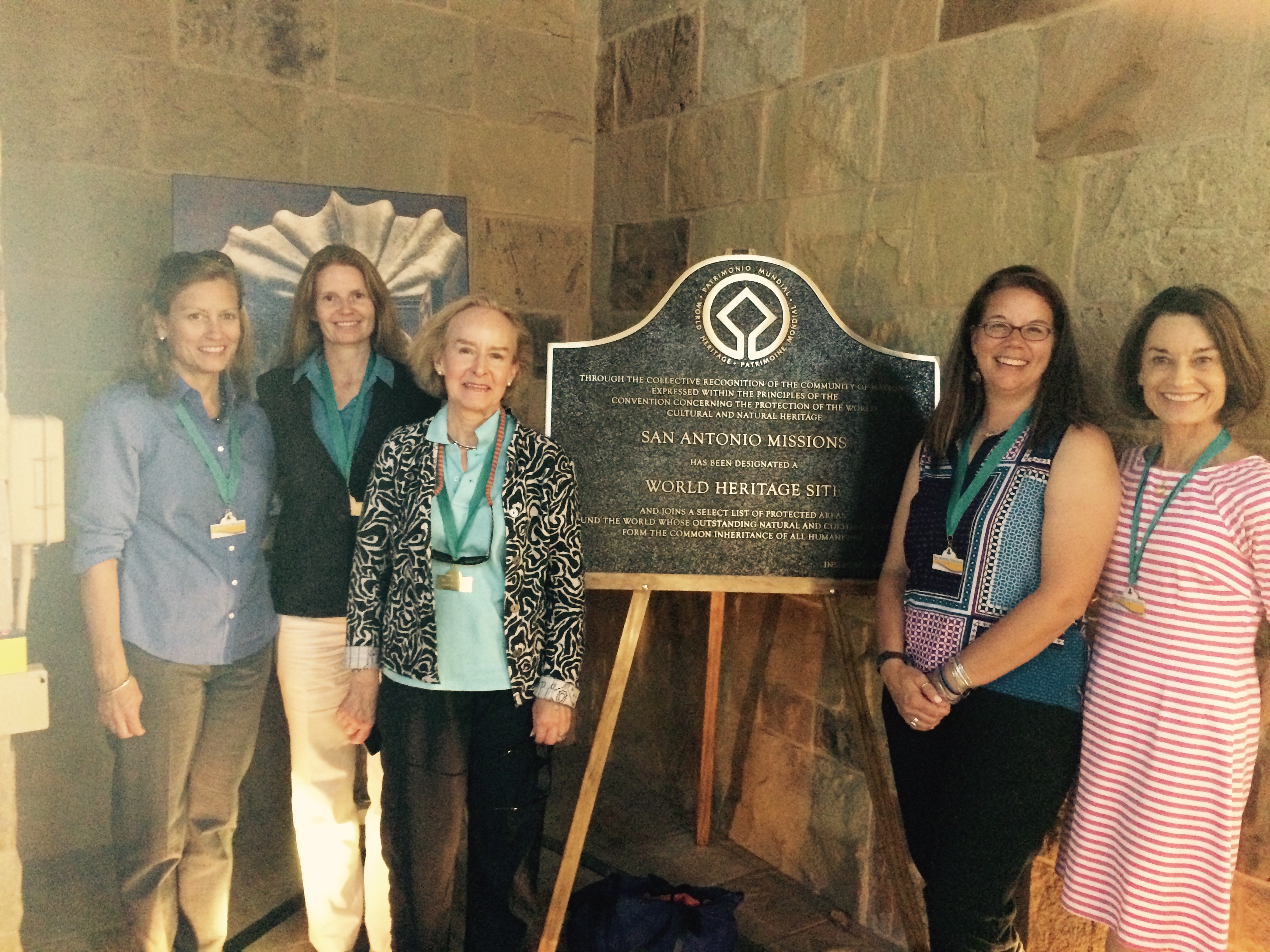
The San Antonio Missions National Historical Park was designated by the United Nations Educational, Scientific and Cultural Organization’s (UNESCO) World Heritage Committee as a World Heritage Site on July 5, 2015 in Bonn, Germany.  This is the first World Heritage Site in Texas and the 23rd in the United States. Many national parks are also World Heritage sites such as the Grand Canyon, Yellowstone,  and the Statue of Liberty.  A World Heritage designation spotlights the “outstanding universal value” and the “cultural significance” of these missions as they join the list of other important sites such as Stonehenge, The Great Wall of China, and the Giza Pyramid of Egypt. There are 1008 of these sites all over the world. 

The designation includes the four missions of San Antonio Missions National Historic Park, The Alamo, one of the original ranches, and their associated cultural landscapes.  The missions were established in the 18th century by the Francisan Fathers as an outreach of the Spanish Government and the Catholic Church.  Their purpose was to evangelize the regional natives, teach them skills, and minister to their needs in an effort to make them active citizens of the Spanish province, Tejas.  The four mission churches within the park hold regular services and are active parishes. 

“The World Heritage List recognizes the most significant natural and cultural sites on the planet, and our missions have now earned a prestigious and well-deserved spot on the list.  The San Antonio missions represent our nations’s largest collection of Spanish colonial resources,” says Suzanne Dixon, Texas Regional Director for the National Conservation Association.  

She continues, “With four of the missions already protected as a national park, their new status as a World Heritage Site will further enhance the experience of visitors while vastly expanding the missions’ impact on the city of San Antonio.” 

Left to right: Suz; Judge Nelson Wolff; San Antonio Missions National Historical Park Archeologist Susan Snow; Henry Muñoz; U.S. Amb. to UNESCO Crystal Nix-Hines; UTSA Dean of the School of Architecture Dr. John Murphy; Councilmember Rebecca Viagran (D3); Mayor Ivy Taylor; Hugh Miller; Shanon Miller, director of the City’s Office of Historic Preservation.

At the meeting in Bonn, Germany this past July! Left to right: Suzanne Dixon NPCA; Judge Nelson Wolff; San Antonio Missions National Historical Park Archeologist Susan Snow; Henry Muñoz; U.S. Amb. to UNESCO Crystal Nix-Hines; UTSA Dean of the School of Architecture Dr. John Murphy; Councilmember Rebecca Viagran (D3); Mayor Ivy Taylor; Hugh Miller; Shanon Miller, director of the City’s Office of Historic Preservation.

The increased economic impact for the community is noteworthy with $100 million in economic activity and up to 1,000 extra jobs.

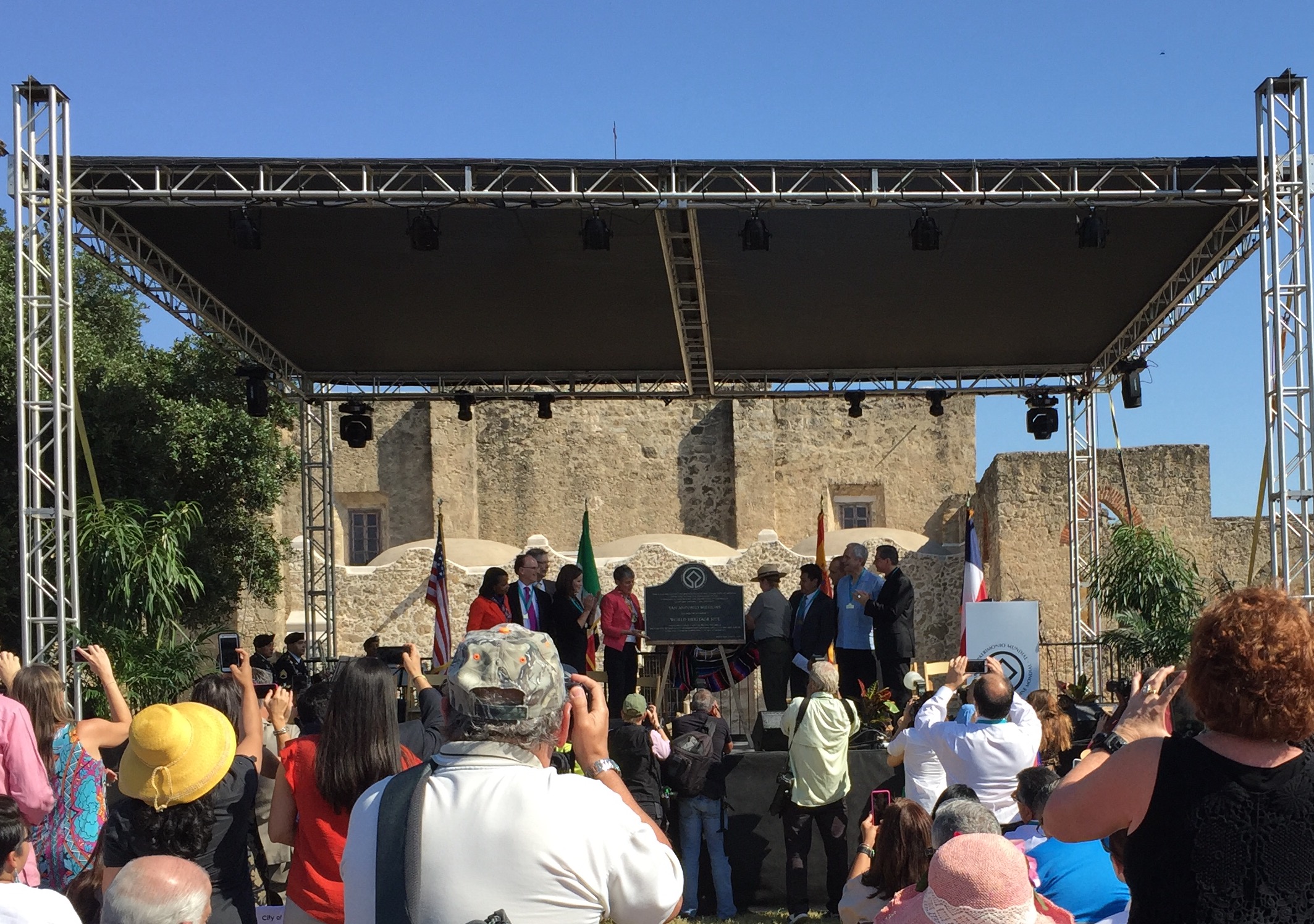
The Unveiling of the World Heritage Plaque in front of Mission San Jose Y San Miguel De Aguayo

The Unveiling of the World Heritage Plaque in front of Mission San Jose Y San Miguel De Aguayo on October 17, 2015

At the World Heritage Ceremony of the Plaque unveiling this past Saturday, October 17th, Sally Jewell, Secretary of the Interior, spoke about the Pope’s recent visit to the U.S. and his powerful message about climate change and inequality. But she reminded us that he also talked about about the history of Spain, Mexico and the Catholic Church in the United States. The history of connection with indigenous people – sometimes positive and sometimes not so positive – is a story that is told here at the San Antonio Missions and an important part of our history and culture. She also reminded the audience that this designation is good news for San Antonio and the hotels, restaurants, and people that will come to San Antonio that might not have visited Texas before. Now it is on the international map.

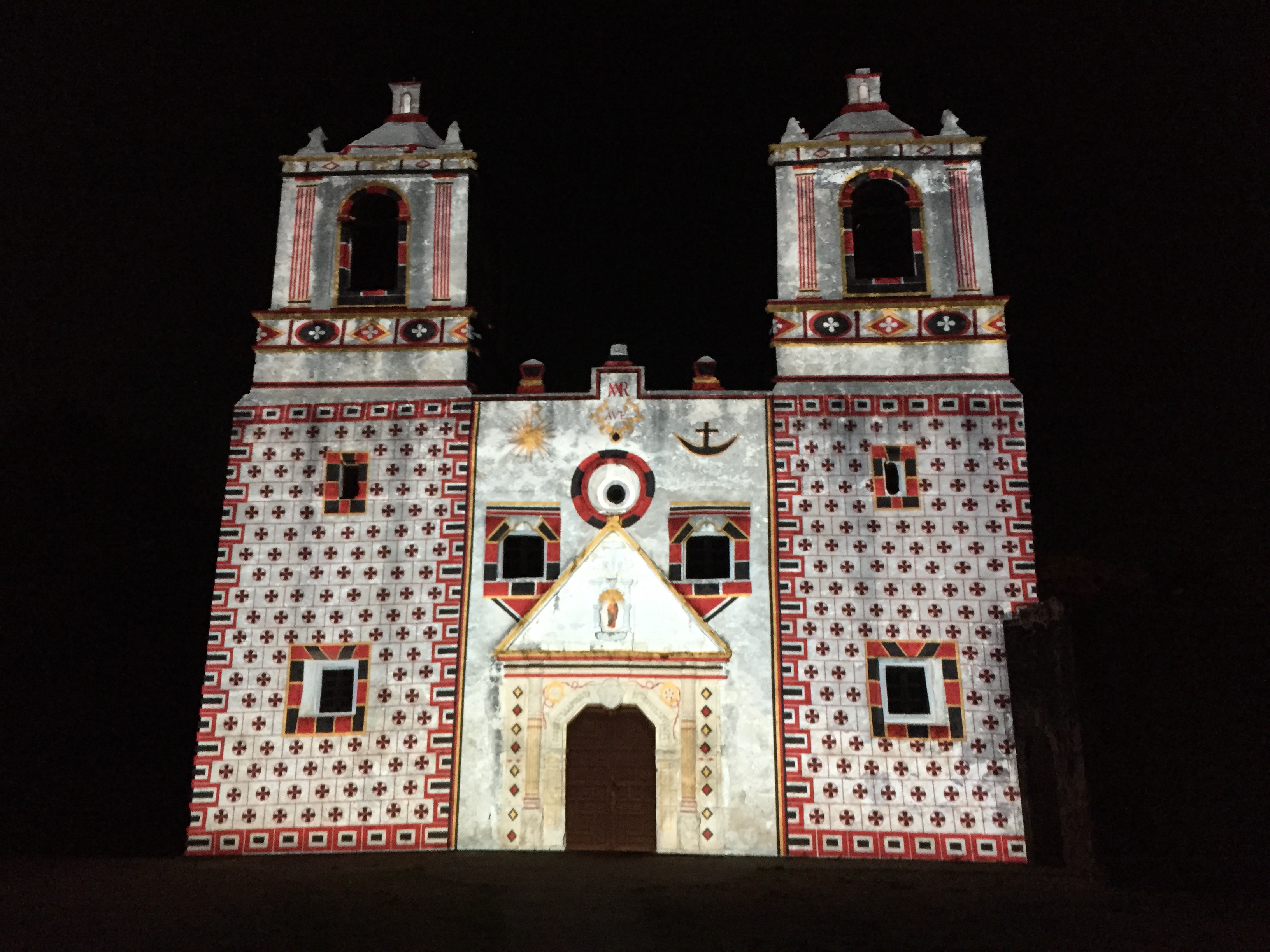
Light DIsplay the night before the World Heritage Ceremony Plaque Unveiling

Light Display replicating the Mission Concepcion frescos of the 1700s the night before the World Heritage Ceremony Plaque Unveiling

The Plaque up close and personal

The Plaque up close and personal in the Visitor’s Center after the ceremony with NPCA’s Suzanne Dixon, Some of the Texas NPCA Regional Council Team and Jan Anderson, President US National Committee of ICOMOS

Now Let’s Talk Mammoths

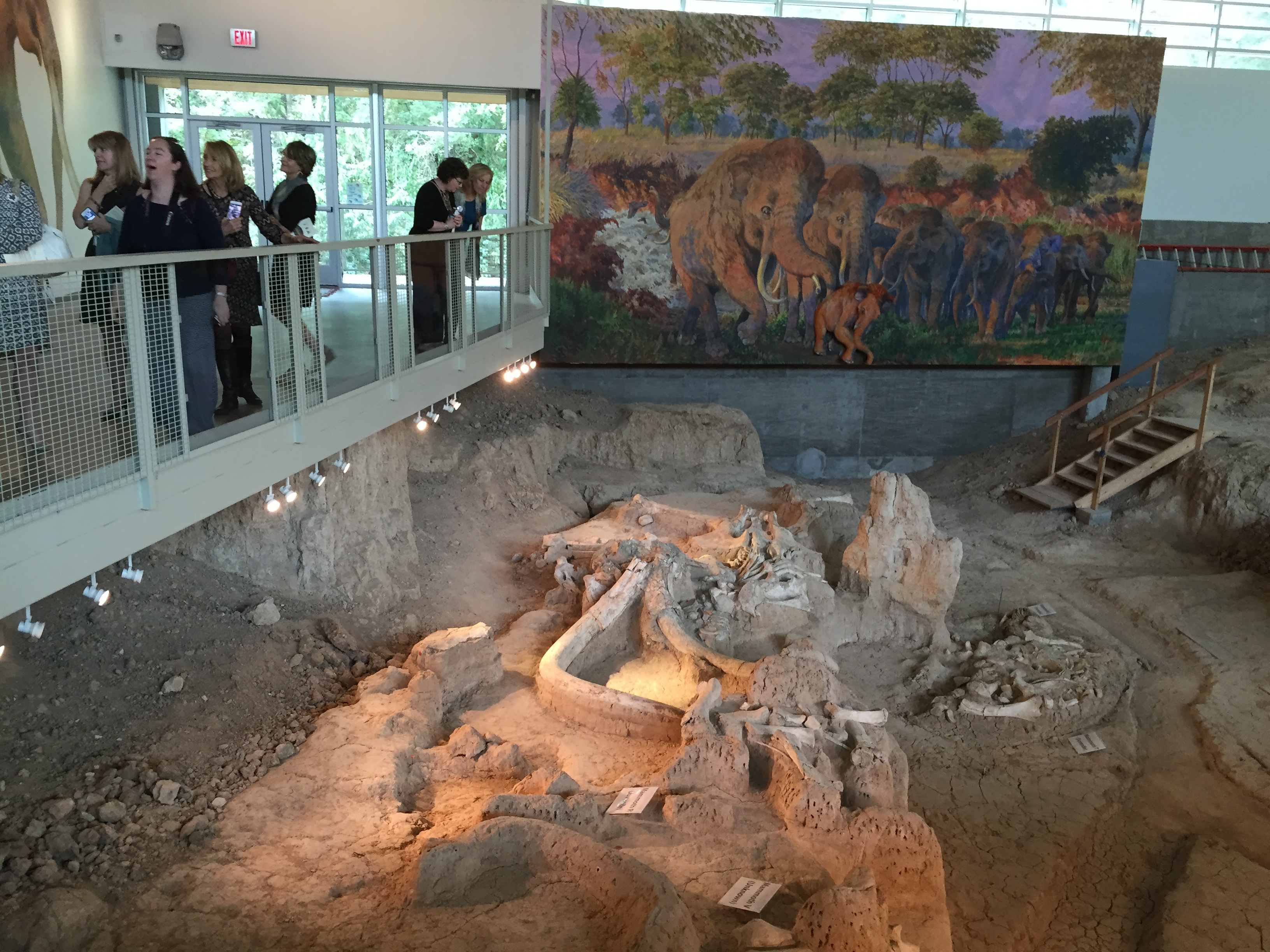
On July 10, 2015, President Obama designated the Waco Mammoth National Monument, our 408th unit of the National Park System, using the Antiquities Act of 1906. Our newest monument sits within 100 acres of wooded parkland along the Bosque River and provides a glimpse into the habitat and lives of Columbian mammoths and other Ice Age fossils.

This story of discovery began in 1978 by two men who were searching for arrowheads near the Bosque River and discovered the only recorded example of a nursery herd (a group of females and their babies, a family unit) of Pleistocene mammoths in the United States. From this point, researchers then found the remains of 24 Columbian mammoths, and also includes a large male or bull mammoth and the remains of a camel and the tooth of a young saber-toothed cat found next to an unknown animal. 

In a NPCA interview with Reagan King, the site’s director, she was asked what the significance was in finding this kind of herd. She replied, “One of the goals of paleontology is to look at some object, preferably an animal fossil, and make educated predictions about how that animal lived and died. Because the nursery herd dies together simultaneously, we know that they behaved much like elephants do today.  It’s very unusual for fossil remains to tell you about the behavior of animals, but ours provide information that you can’t find anywhere else. That’s why this site is so important to science.”

The Exhibit at The Waco Mammoth National Monument

The Exhibit at The Waco Mammoth National Monument

This site designation is a true example of bi-partisan collaboration with partners coming together for a common goal. America’s newest monument was already an established educational facility and a source of pride for the Waco community. It attracts 20,000 visitors a year including large groups of students. Since it was discovered, the site has been collaboratively protected by the City of Waco, Baylor University, and the Waco Mammoth Foundation. The evacuation of the site has been partitioned into phases and the Park Service has been included since the beginning.  It’s reported that there are even more mammoth remains yet to be found.

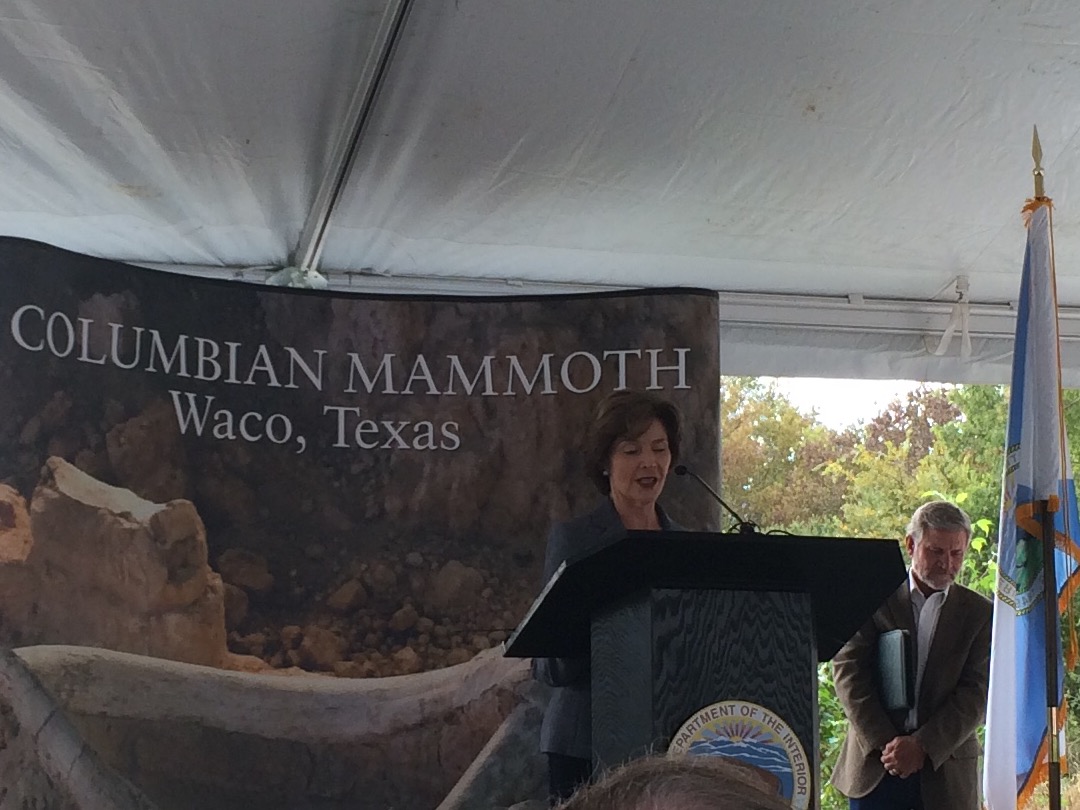
A quote by Texan and former first lady Laura Bush really sums it up: “Today is a special day for Texas. President Bush and I are thrilled that the Waco Mammoth Site is America’s newest national monument. I applaud President Obama, the city of Waco, Baylor University and the National Park Service, who worked to develop, preserve and champion the Waco Mammoth Site. The Waco Mammoth Site takes visitors back in time nearly 65,000 years and reminds us of our country’s connection to the history of our planet. As we approach the centennial of the National Park Service in 2016, this is a great time to celebrate our nation’s parks.”

Former First Lady Laura Bush promoting the every kid in a park with First Lady Michelle Obama - a new WHite House youth initiative to get all 4th graders and their families to experience our country's parks FREE OF CHARGE

Former First Lady Laura Bush at the designation ceremony on October 5, 2015 promoting the “every kid in a park” program with First Lady Michelle Obama – a new White House youth initiative to get all 4th graders and their families to experience our country’s parks FREE OF CHARGE.

Suzanne Dixon, the National Parks Conservation Association's Texas Regional Director, was instrumental in linking all the parts moving parts.

Suzanne Dixon, the National Parks Conservation Association’s Texas Regional Director, was instrumental in linking all the moving parts to get the project to the finish line of the 408th NPS Site.

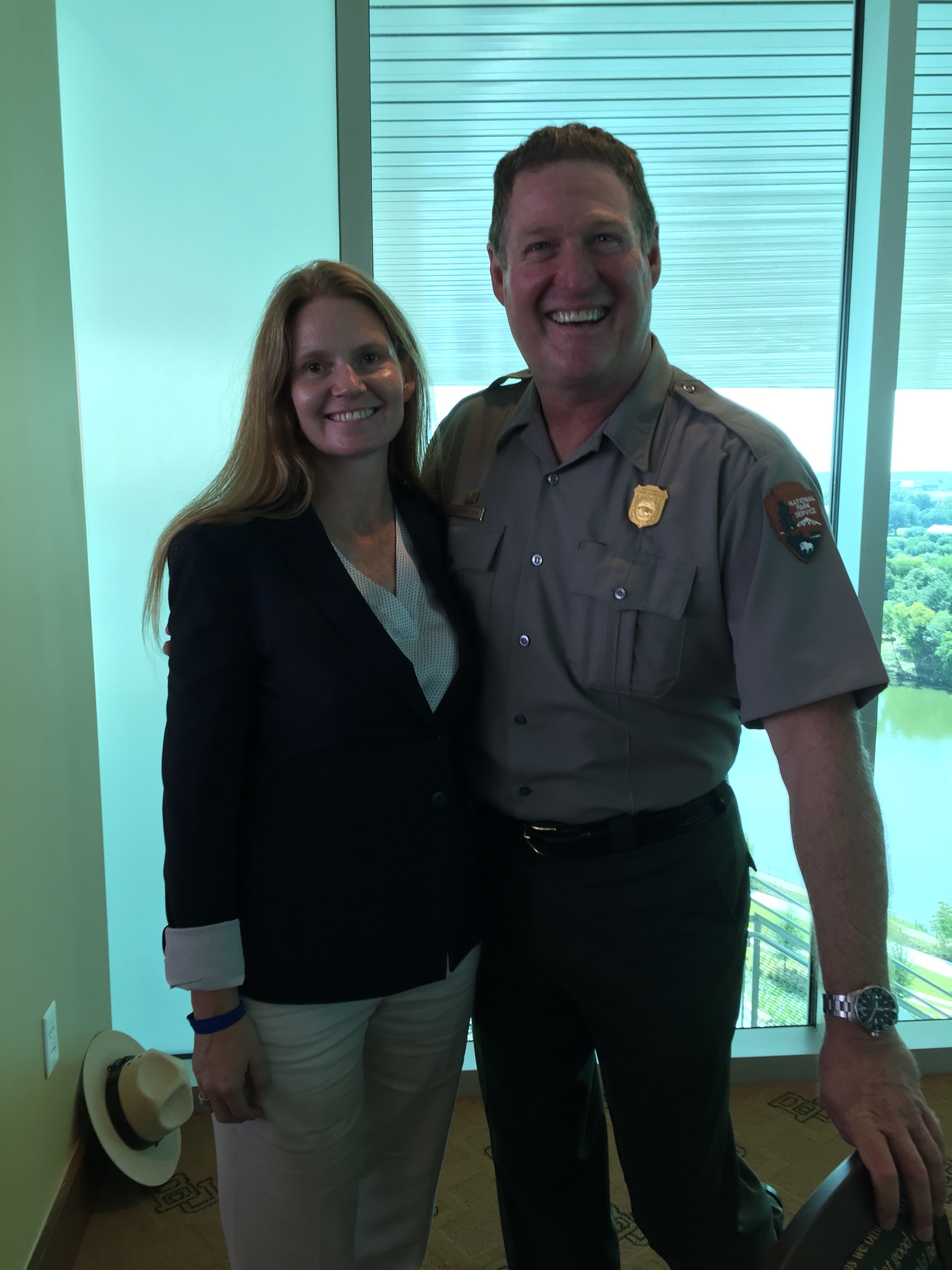
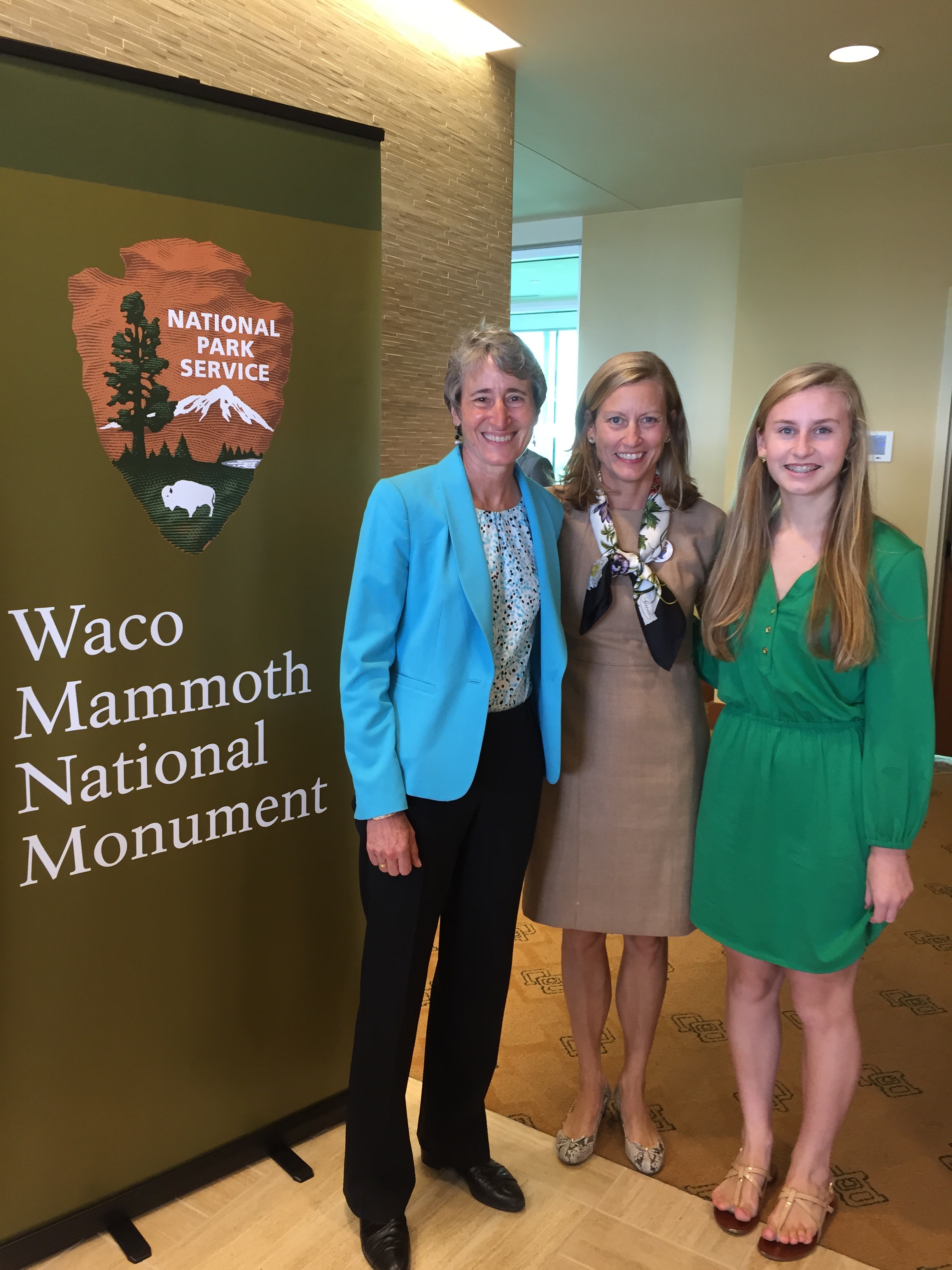
Took my daughter Sarah out of school to attend the dedication ceremony and witness history in the making. Here we are with The Secretary of the Interior Sally Jewell - I'm a big fan!!

Took my daughter Sarah out of school to attend the dedication ceremony and witness history in the making. Here we are with The Secretary of the Interior Sally Jewell – I’m such a fan.

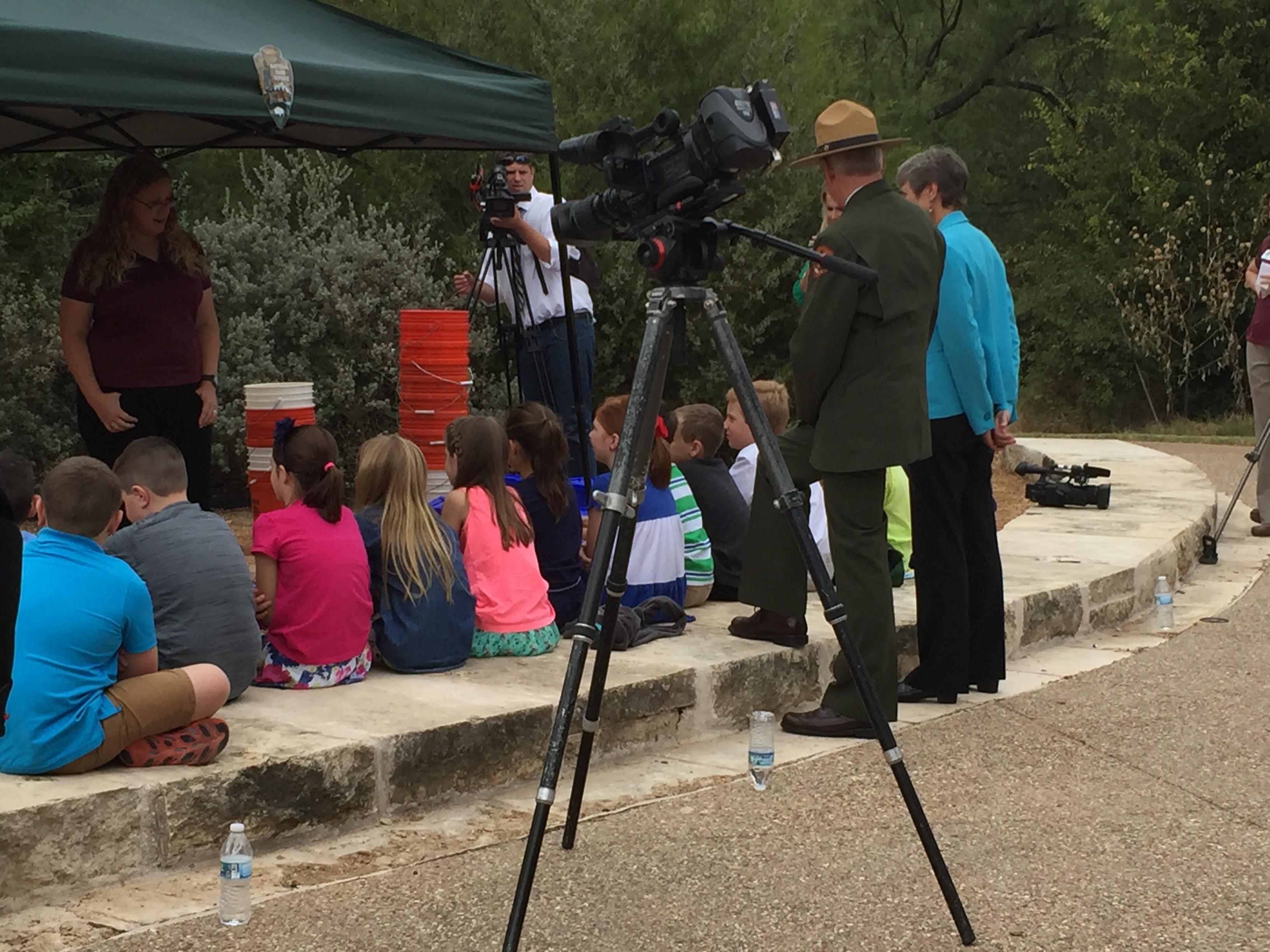
NPS Director Jonathan Jarvis and Secretary of Interior Sally Jewell overseeing a presentation to school children at the dedication.

NPS Director Jonathan Jarvis and Secretary of Interior Sally Jewell overseeing a presentation to school children at the dedication.

So hey y’all – what are you waiting for? Go on a mammoth mission to get to these two special places or the National Park of your choice.

It’s our history and they are open for business in a big way.

Finding Our Voices in our own Backyards

“The Griswalds are off!”  That’s what Russ says when we are finally backing out of the driveway headed to the airport or the open road for a family trip or excursion.  I’m the last in the car because for some reason I need to sweep the kitchen real quick, fluff up the pillows and check the doors for the 4th time… Perhaps a small touch of OCD.

What is it about traveling that makes it so worthwhile? Is it the out-of-the-routine, out-of-the-boxiness adventure? The immersion into a new place and all the newness it brings with untasted flavors, unmet people and unexperienced experiences? For me, YES! (And I also like to buy souvenirs). We learn the story of a place and its people. We absorb the environment through our senses – the climate, the flora and fauna, the noise, the smell, the people. We connect and reconnect with ourselves and others.

If you share my midlife goal of furthering my knowledge about the incredible story of this country, our National Parks are the best teachers. So before I go any further, let’s watch this short video from the NPS:

http://https://www.youtube.com/watch?v=0ykvO8UN3g0

With the 100th birthday of our National Parks, The National Park Conservation Association has launched a complementary campaign called Find Your Voice. Find Your Voice is an initiative to educate, engage and empower new National Park advocates to ensure America’s favorite places continue to thrive into their next century.

http://https://youtu.be/kYYKcresB-4

My favorite quote from this video and in general is again my man T.R.~

Do what you can, with what you have, where you are.

I know I am very fortunate to get to travel and I love it. But we don’t have to go to a foreign country, or fly across the U.S. We have gems right under our noses that I know I take for granted.  In our area. In our state. And it doesn’t have to be a big iconic park or monument that you see in magazines. It can be your favorite state park, the beach, or your favorite green space in your neighborhood.  The point is, all boats rise together and awareness starts at home.

My home in the great state of Texas and the NPCA regional office has tailored a special campaign just for us ~ Find your voice YALL. That’s one of the things I love about NPCA.  It’s not just a D.C. organization.  They have regional offices all over the country ready to help you get involved.  They are grassroots and listen to your local issues regarding the National Parks in YOUR area.  Look them up and connect.

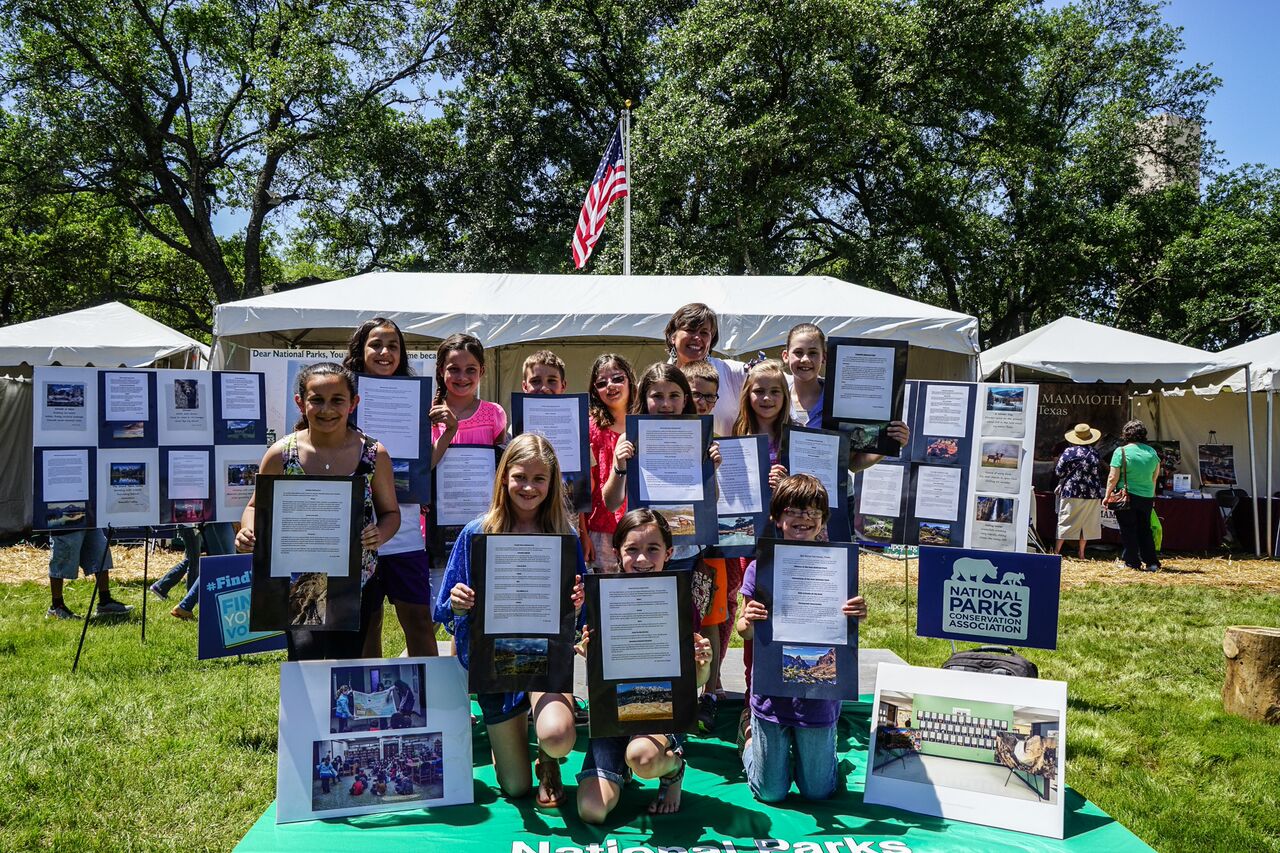
Well, y’all, on April 24 – 26th, NPCA kicked off our Lone Star campaign at the Dallas Earth Day event.  Earth Day Texas (formerly Earth Day Dallas) is an annual outdoor festival seeking to elevate environmental awareness and influence the way Texans think, live and work.  This family friendly and FREE admission event allowed leaders in the corporate, academic and non-profit worlds to unite and show Texans how green lifestyle choices can lower their cost of living, improve their health and help save the environment.

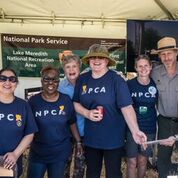
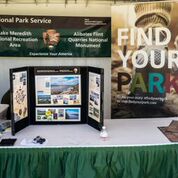
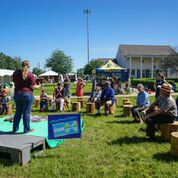
This 2015 Earth Day event took place at Fair Park in the heart of Dallas and hosted about 1000 exhibitors and 57,000 guests.  Thank you to photographer Robert Cowan for the images and the Texas Regional staff.

NPCA setup at Earth Day TexasGreat%20JobNIOSA-170-1NIOSA-175

Earth Day Texas was the NPCA Texas Find Your Voice Campaign kick-off for an 18 month campaign to educate, engage and empower Texans to care about their 15 national parks, to become more aware about what is in their back yard and thus, will hopefully become advocates.

Did you know the 15 Texas National Parks protect more than 1.2 million acres of land and preserve countless treasures from our state’s natural and cultural history? The story of these places began millions of years ago, and continues to develop today.  Our Texas parks offer recreation, protection for unique ecosystems and threatened species,  opportunities to learn while providing economic benefits for our communities. In fact,  every dollar invested in our parks yields ten dollars to economic activity for the  surrounding community.

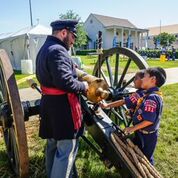
To further promote our state treasures, NPCA and Earth Day Texas hosted a large (14,000+ square foot) public lands pavilion for the weekend.  13 of Texas’ 15 park units were represented and provided hands-on activities for participants and conducted Center Showcase Presentations where they had 15-20 minutes to talk about what makes their park special and give visitors a chance to ask questions.

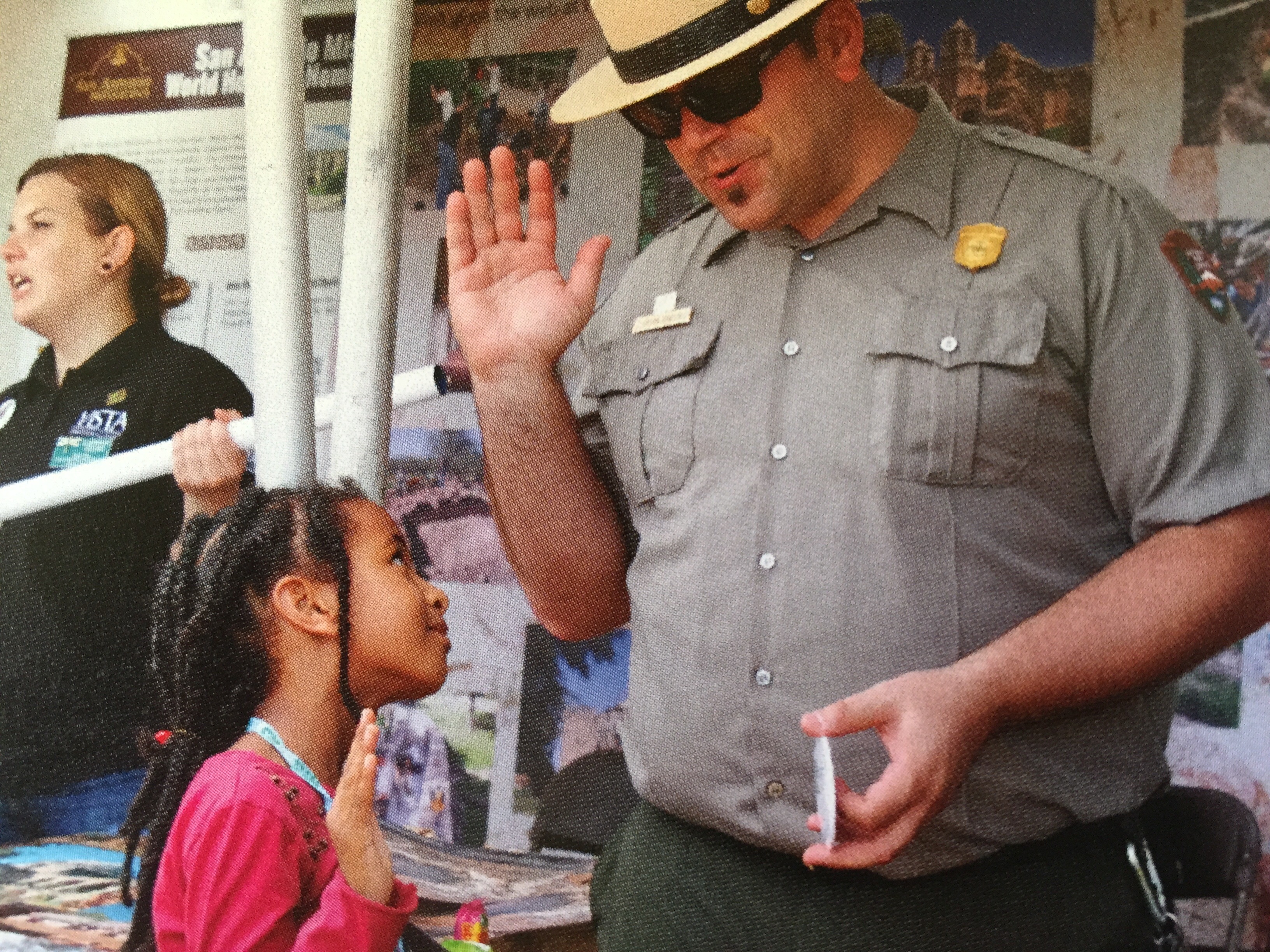
Ranger Jason Ginder inducting a new Jr. Ranger Chief of Interpretation & Education

Ranger Jason Ginder, Chief of Interpretation & Education for The Big Thickett National Preserve inducting a new Jr. Ranger. He offered this to say about the event:

Earth Day Texas was a wonderful opportunity to collaborate with other NPS units in Texas and to reintroduce our combined resources, recreational opportunities and education efforts to thousands of Texans who attended this event.

I most enjoyed the opportunity to assist people in finding the parks in their own backyard.  I was pleasantly surprised by the youth who visited each interactive display.  Their willingness to ask questions and talk with park rangers was a great experience for everyone.

Palo Alto Battlefield commemorates the 1846 battle battle between the US and Mexico and protects large ecosystems of acacia and mesquite trees, yuccas, and cactus.

Palo Alto Battlefield commemorates the 1846 battle between the US and Mexico and protects large ecosystems of acacia and mesquite trees, yuccas, and cactus.

Interactive Projects!

Interactive Projects!

Representing Lyndon B. John National Historial Park.

Representing Lyndon B. Johnson National Historial Park here’s Ranger Brian Vickers, aka “Cookie” ~

Earth Day Texas was a great opportunity for publicizing the national parks in Texas.  The most common comment heard was ‘we had no idea there were national parks (or so many national parks) in Texas’.

The thing I personally enjoyed most was talking about and demonstrating chuck wagon cooking to visitors who actually took the time to stop and learn.  They were amazed at what could be done with cast iron cookery over an open fire.

Now one more quote from Ranger Patrick Gamman of the Padre Island National Seashore~

In the end, my favorite interactions with the public was sharing the fact that even if you live far inland, you can still have a positive impact on the life of a sea turtle by keeping plastic bottles and bags out of rivers.  If we keep plastics out of rivers, then we can keep plastics our of sea turtles!

It was an incredible kick off – a great way to be aware of all the accessible excursion opportunities this summer and beyond as we celebrate the 100th birthday of our national parks. Oh, and did you hear about the every kid in a park initiative?  To inspire the next generation to discover all that America’s public lands and waters have to offer, the Obama Administration will provide all 4th grade students and their families free admission to all National Parks and other federal lands and waters for a full year, starting with the 2015-2016 school year.  For more information on this exciting way to celebrate the centennial with your family click here.

In closing, I was fortunate to be in San Antonio this past Friday as they celebrated the boundary expansion of The San Antonio Missions National Historic Park and their World Heritage Delegation headed to Germany for the vote in July.  For more information on the exciting World Heritage Designation click here.

Pictured below is Suzanne Dixon, Texas Regional Director, along with Bexar County Judge Nelson Woff, Congressman Lloyd Doggett and other folks who have worked so hard on this! Suzanne presented Congressman Doggett with the National Parks Conservation Association’s National Park Heritage Award.

IMG_1703IMG_1710
Hope you have a great summer wherever you go experiencing new places, new people and new stories to tell!

Bolivar ~ if you know it, you love it! And the future is bright!

Port Bolivar, Texas – Our Texas Vacation Paradise

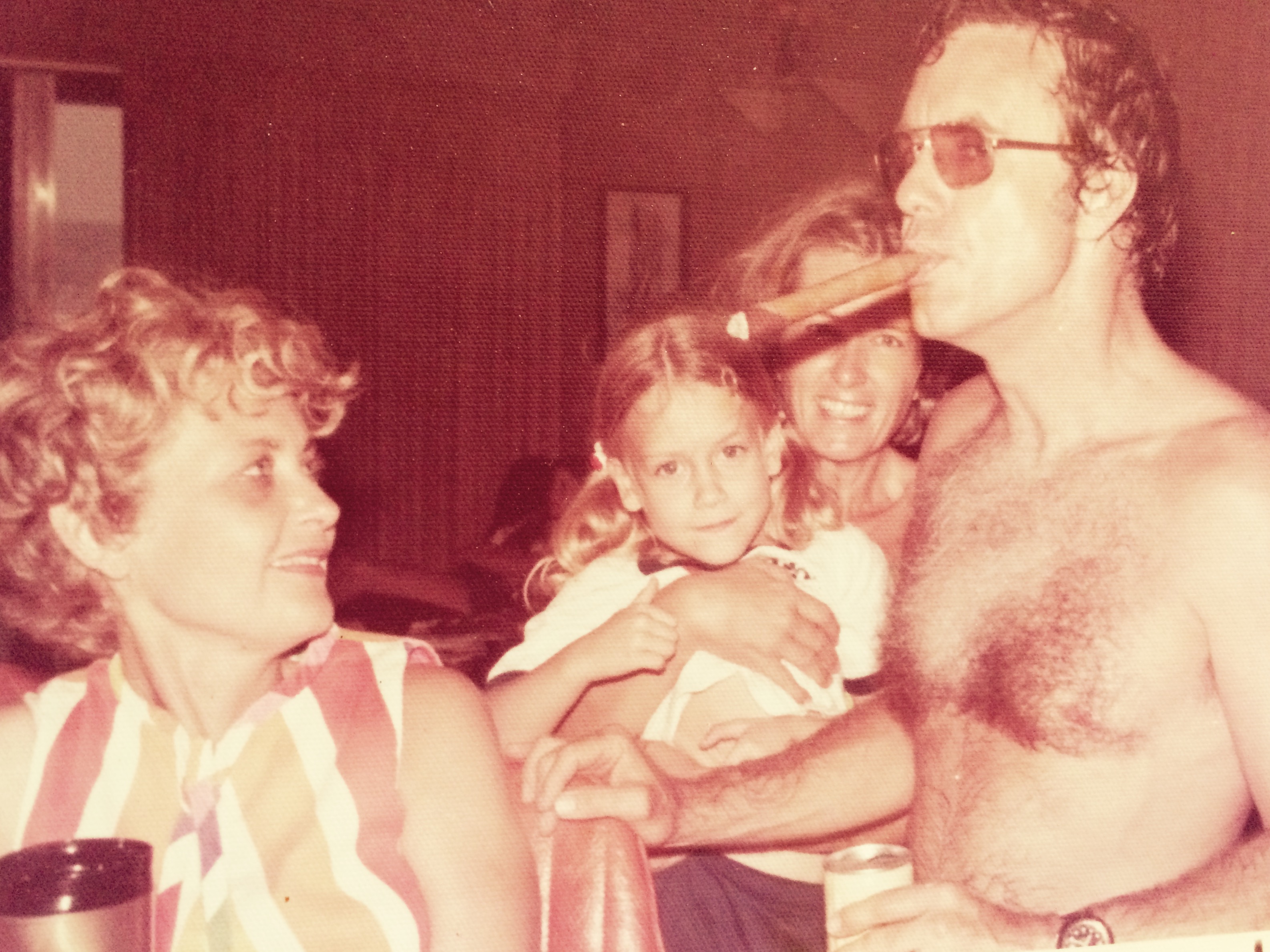
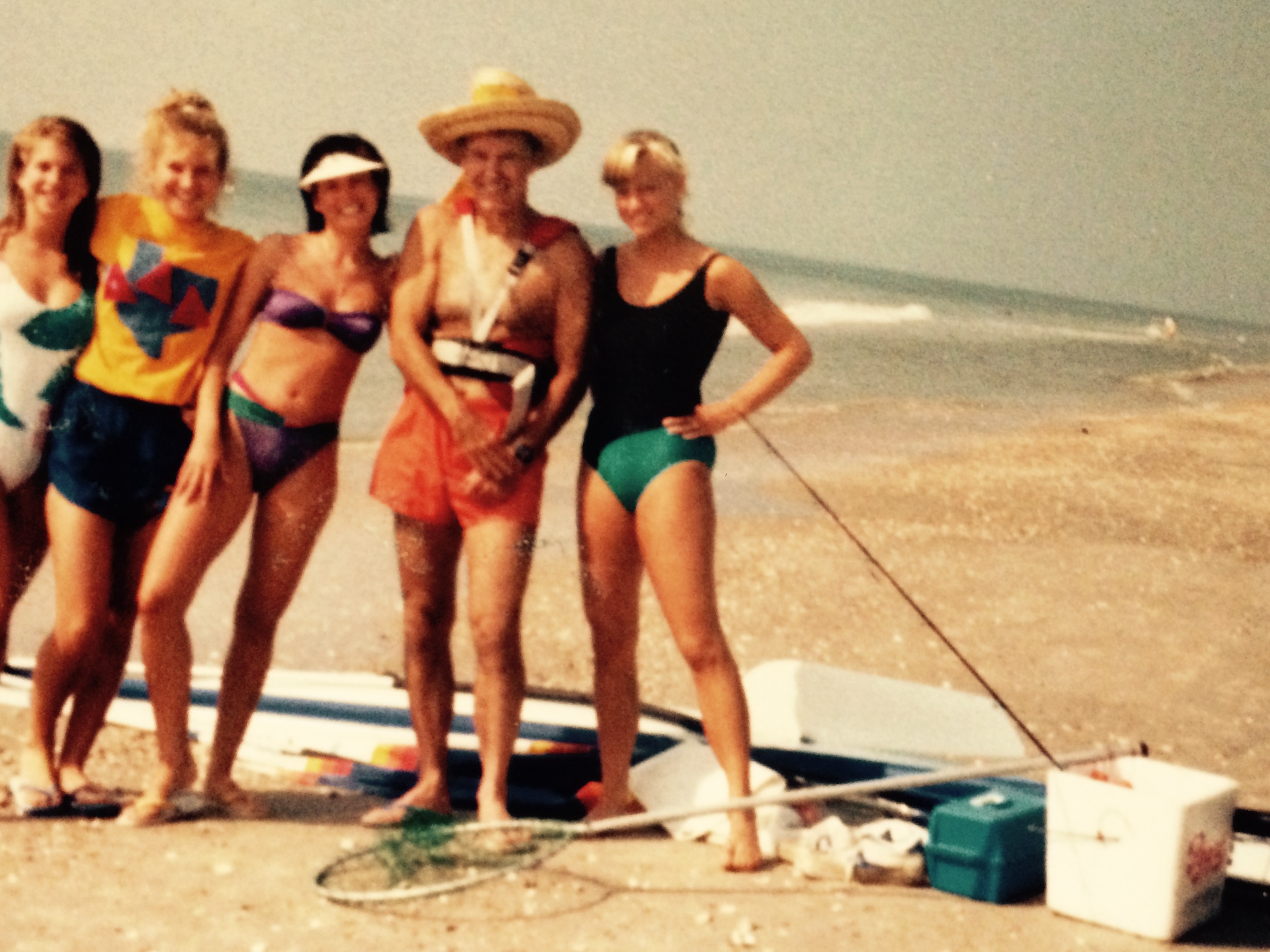
It’s a beautiful summer sunny day in 1975. I’m 8-years-old and I wake up in our rental beach house bunk bed which was exciting in itself; a double-fun whammy for little me… bunk beds AND the beach. My mother, or Mama as I called her, is preparing a breakfast of pancakes of the silver dollar variety and bacon. She informs me in her central Texas, Waxahachie drawl “Lizbeth, your faatha (or daddy, C.W., C. Baby to his friends) is busy settin’ up a rig in the surf to catch some crabs for dinnah.” I wanted to get moving as I wanted to go swimming and daddy was the only one to take me. My teenage sisters, Susan and Carolyn, were still asleep and Mama, a.k.a Dorothy Anne, would not get her hair wet – you know, it would mess up her weekly beauty shop shampoo-and-do. Although on these extended beach trips, she was known to wash it herself and then wear it back in a scarf and I loved how earthy she looked. But let me talk about daddy’s “crab rig” for just a moment cause it’s very important. Picture this: empty plastic floating milk jugs with strings attached vertically and horizontally which span about 50 feet. The vertical strings had chicken necks with a weight at the bottom, the horizontal strings were attached to other milk jugs with the bait and so on and so on… Daddy always wore one of mama’s sun hats and had his styrofoam floating cooler nearby filled with beer, ice, chicken necks and caught crabs, all mixed together. All I can say it was the 70’s before we were all crazy about germs and we somehow survived and enjoyed some delicious boiled and barbecue crabs.

Some families went to Europe, New York City or Washington D.C. Some spent time camping in the Grand Canyon and parks across the country or going to Disney. Many rented beach houses in Galveston. We went for two weeks in the summer in the 70’s to Bolivar! A rental house in Singing Sands (with the aforementioned bunk room!) and lots of company was just heaven. My older sisters and their friends, my parent’s friends, our cousins, and even my young friends got to come for a few days. Daddy would drive to and from work during the week since it was only 50 minutes to Beaumont. I thought it was the most perfect vacation spot in the entire world. My days were spent swimming in the Gulf and riding the waves, looking for shells, trying to include myself in what my sisters and her friends were doing and making plaster of paris sculptures in the sand with mama. When we came up from the beach there was a gasoline can and baby oil at the front door for us to use to rub off the tar on our feet! Remember that? You know who you are!

Good times being had at The SInging Sands rental house.

Good times being had at Bolivar at The Singing Sands rental house.

Daddy loved to have picnics at the historic Fort Travis and take us to see the light house where movie legend Patty Duke filmed a movie. And I’m not going to mention the small propeller airplane he landed on the beach because that almost caused my parents to divorce and C. Baby to be arrested. But by the grace of God it worked out and was a colorful memory for me and my 4th grade friends who were actually in the plane – again, you know who you are, and I hope you’re reading this! No one should EVER try this, – he was just lucky on that March morning.

Here's a safer 70's option for traveling to Bolivar to Beaumont.  The back of the pick up truck with my besties Suzanne and Stephanie.

Here’s a not so safer 70’s option for traveling to Bolivar from Beaumont. The back of the pick up truck with my besties Suzanne and Stephanie.

In the 80’s my parents built their own house in the next addition and the good times continued with celebrations, college friends, more crabbing, attempts to wind surf and our young families. I have been fortunate to experience the unique, quirky magic of Bolivar and it is such a part of me. Times change. There is no more tar on the beaches thanks to increased environmental standards, the beautiful brown pelicans are back in full force after being endangered. Hurricane Ike in 2008 which ravaged the area, destroying property and devastating the coastal community, will forever be part of our personal history. Our house was swallowed by the gulf as were many others. I had never witnessed firsthand how powerful Mother Nature could be as we combed the beach looking for our valued beach house possessions and thinking about the heartbreak for families who actually lived on the peninsula full-time.

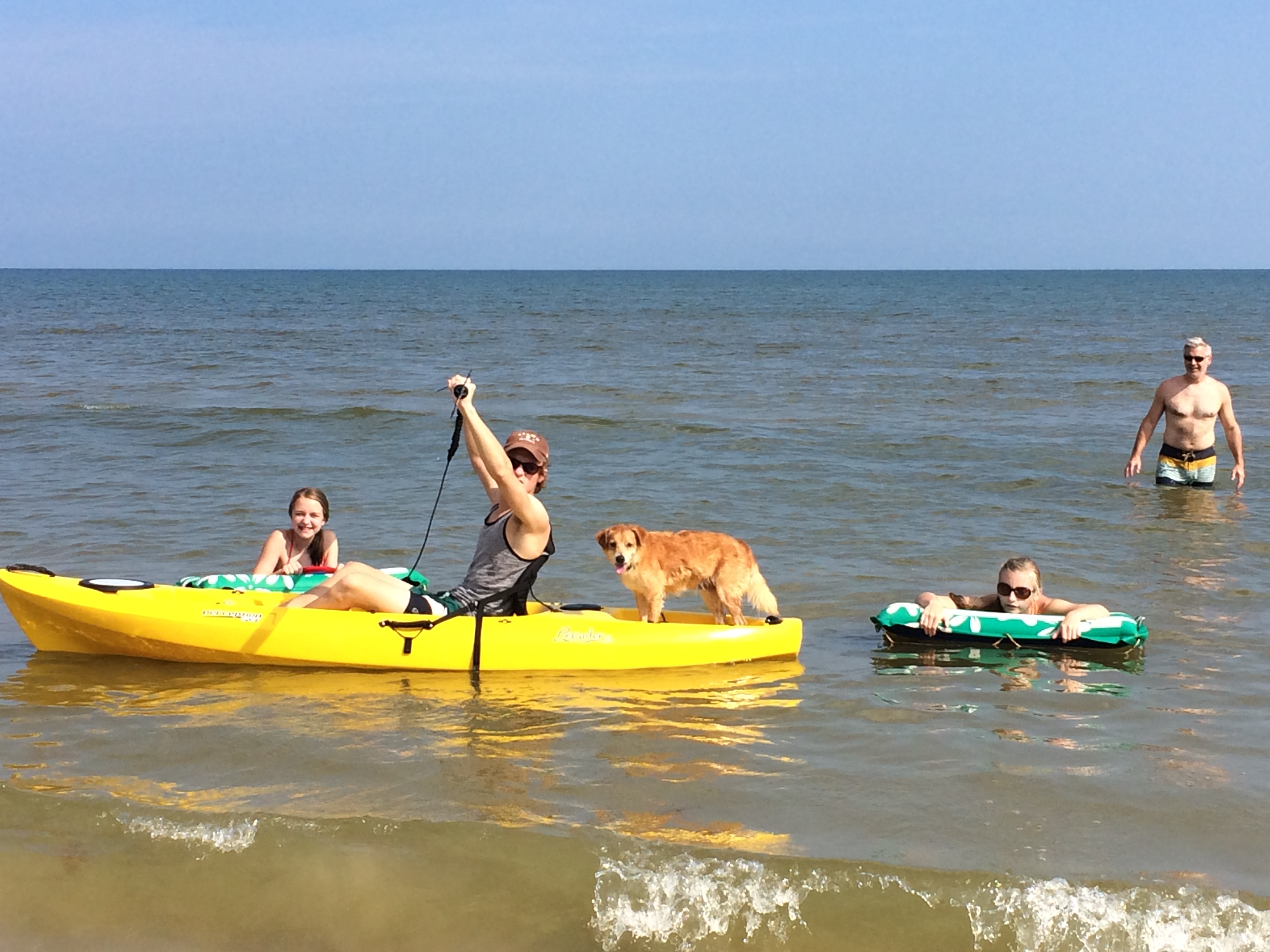
Now in 2015, it seems to me that Bolivar is back – and back big. My own family rebuilt a house not far from my parent’s old place and there are a variety of new, sherbet-colored houses which pepper the landscape. Recreation is at its southeast Texas finest with fishing, bird watching, ocean kayaking, stand up paddle boarding, beach combing and folks still enjoying themselves in crazy Bolivar beach ways (I’m thinking of some line-dancing a group of spirited people were doing as I rode by in my golf cart last summer).

Fun times with the ocean kayak.

Fun times with the ocean kayak.

A Great Idea ~ The Lone Star Coastal National Recreation Area.  Now this is exciting if you haven’t heard! 

After Hurricane Ike, some concerned and forward-thinking individuals asked the question, “What can we do in the future to protect our area by enhancing coastal resilience and mitigating storm damage?” This powerful hurricane demonstrated that the undeveloped lands of the Texas coast store vast amounts of surge tide. The storage capacity of this natural landscape of wetlands helps to decrease flooding inland and thus, property damage. The hurricane inflicted less damage on parts of the region that were protected by undeveloped land. Aside from protection against economic loss, our coast is a prolific estuary as Galveston Bay generates $3 billion annually for the seafood industry following Chesapeake Bay in productivity. Rice University’s Severe Storm Prediction, Education, and Evacuation from Disasters (SSPEED) Center, a research organization created after Hurricane Ike and funded by the Houston Endowment, answered the call and an idea was born and grew ~ The Lone Star Coastal National Recreation Area.

Merging Conservation with Tourism: A Winning Combination

You might be asking, “So that sounds good, but what does it mean for us?” A National Recreation Area is a designation by Congress to land and water with significant outdoor recreation potential of national significance – our coast certainly fits the bill. There are 18 NRAs in the United States. They are part of our national system of park units including Big Bend and the Grand Canyon. Each Recreation Area is unique and varies in size, land ownership structure, governing institutions and functional purposes.

A coalition of public and private landowners developed a proposal for the Lone Star Coastal National Recreation Area with influential Houston businessman John Nau as the steering chair and former Secretary of State James Baker as honorary chair and the National Parks Conservation Association leading it forward. Suzanne Dixon, The NPCA Texas regional director, and her office has been working tirelessly connecting and communicating with partners and the involved communities ~

These 130 miles of coastland just have so much potential. People from all around the world already come to the area to go birding at High Island, Matagorda, and the Columbia Bottomlands. The area has excellent kayaking in the coastal marshes, two national wildlife refuges, oyster reefs, great fishing, Civil War-era shipwrecks…all the natural, cultural, architectural, and historical attractions that make it ideal for a national recreation area. Many people just don’t know that it’s here. A Park Service designation would change that.

Simply put, it would unify 4 upper gulf coast counties ~ Matagorda, Brazoria, Galveston and Chambers ~ into a recreation area with shared marketing, recreational activities and the above mentioned conservation benefits through a mosaic of public and private land. The economic impact would be an important boost to tourism attracting 500,000 visitors in the first year, creating 1,200 jobs and $46 million in local sales according to the economic impact study. These numbers would grow in sequential years. Gateway counties such as Jefferson county would reap the benefits, as well.

I know there is ample opportunity for a new term I just learned: geotourism – tourism that is linked to a region’s geography, history and natural resources.  Think about all the outdoor recreation we enjoy and is growing – fishing, hunting, kayaking, crabbing, bird-watching, sailing, stand-up paddle-boarding, you name it!

Here's my dad, the ultimate goetourist with me and college friends.  See the crabbing paraphenalia? The wind surfer?   Too much to do, so little time!!

Here’s my dad, the ultimate geotourist with me and college friends. See the crabbing paraphernalia with the cooler filled with crab, beer and chicken necks? The wind surfer? Too much to do, so little time!!

We had the great opportunity to host the Executive Director and Program Manager of former First Lady Laura Bush’s new conservation project called Taking Care of Texas to show them first hand some of the Bolivar / Galveston attractions of the proposed LSCNRA. The mission of TCT is to spur conservation efforts that benefit communities, build on the success of others, and inspire all Texans to join in. They champion stewardship and bring business minds to conservation matters and conservation minds to business matters. What a wonderful and much needed organization. Click on the above link and take a look at their website and like them on Facebook! I was fortunate to accompany them on the first part of their tour and “relearn” about the area. I met the group in Anahuac at the National Wildlife Refuge visitor’s center. We visited The Houston Audubon’s High Island facility at Boy Scout woods. They went on to Galveston to check out the Sea Scout Base in Galveston, a high adventure marine learning destination I can’t wait to visit. It was a wonderful time and NPCA looks forward to working them!!

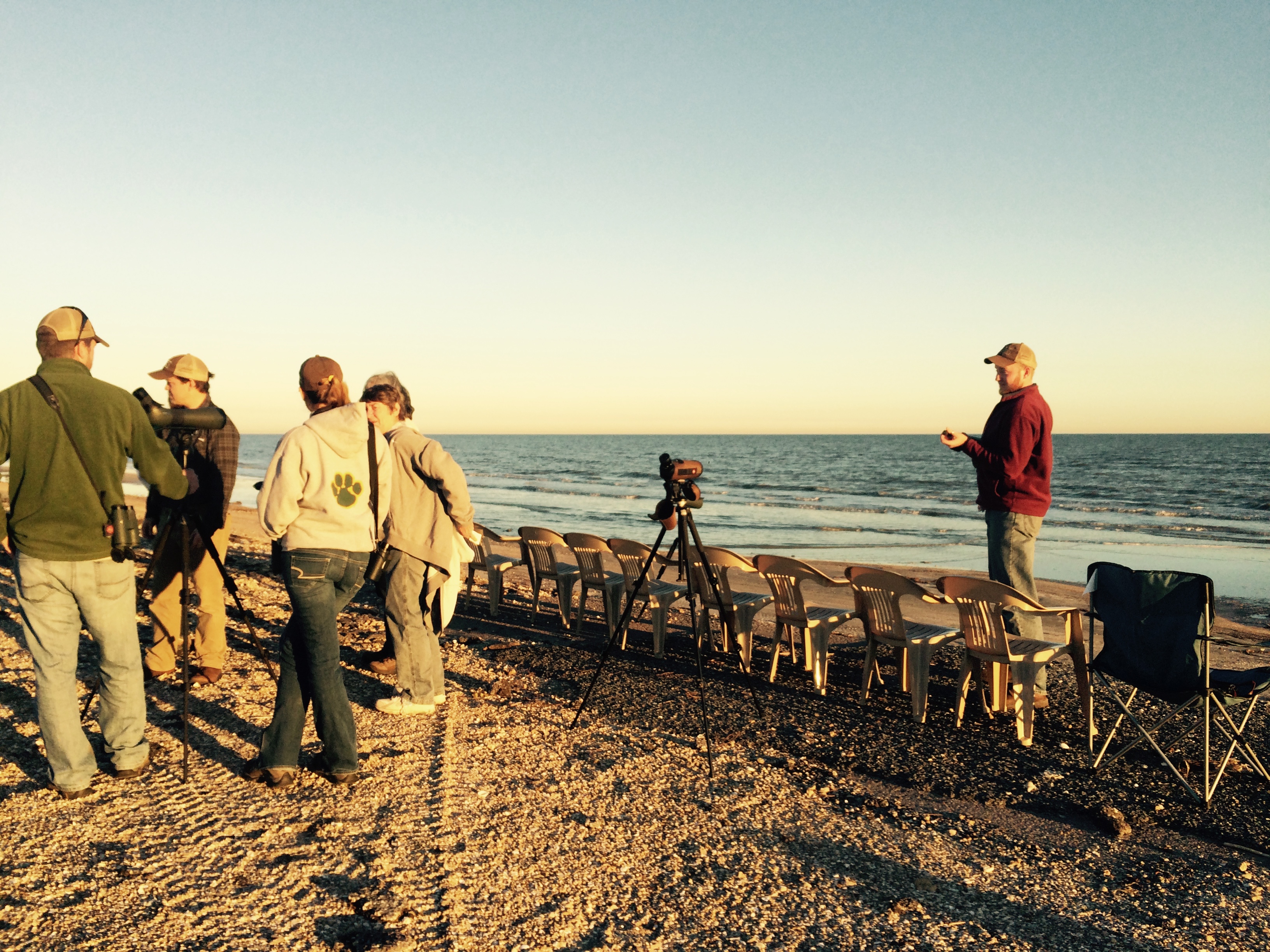
Bird watching on the coast near High Island.  Did you know that birding alone generates $82 billion in indirect economic bebfits, including 671,000 jobs and $11 billion in local, state, and federal taxes.

Bird watching on the coast near High Island. Did you know that birding alone generates $82 billion in indirect economic benefits, including 671,000 jobs and $11 billion in local, state, and federal taxes.

 It’s A WIN-WIN! 

This popular idea is on it’s way to becoming a reality with the next step as the introduction of the legislation in Congress hopefully this spring. Flood damage mitigation, natural beauty and geotourism, positive economic benefits ~ what’s not to love?  Suzanne and NPCA understand what’s important to Texans:

Property rights are really important to folks in Texas. So we’ve stressed from the start that landowners’ participation is voluntary. No one will lose a square foot of their property.

With minimal federal involvement in the form of some NPS staff, voluntary participation, and management by the involved partners and landowners, it is a recipe for success in Texas. More to come on this this exciting project. In the meantime, read more about it and learn about the partners and leadership on the National Parks Conservation website. I’ll leave you with this photo of the bay taken while sipping a sting-a-rita and enjoying some fried shrimp and oysters at the Stingaree in Bolivar… It’s a slice of heaven to me.

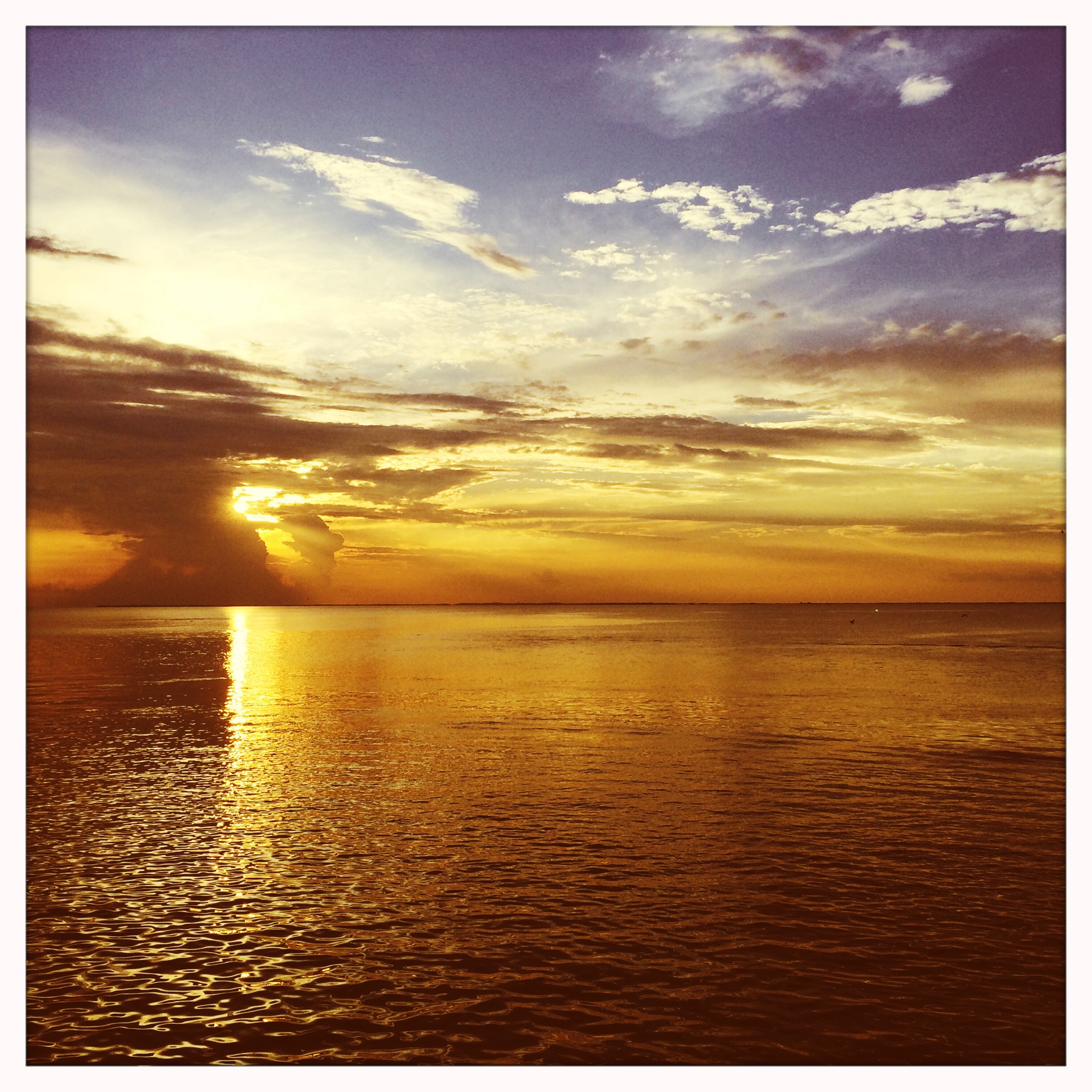
Sun setting on the bay.

Sun setting on the bay.

Sources:

“The Lone Star Coastal National Recreation Area: Economic Prosperity, Recreation and Flood Mitigation Based on Natural Assets”

“NPCA: A Rising Star on the Texas Gulf Coast”

Houston Chronicle

Taking Care of Texas.org

Reflections, Resolutions and Really Good News (spoiler alert: I’m not pregnant)

The Reflections and Reaffirmations Part

I thought I would do another blog entry sooner than this but hey, I was “busy”! Did you not know it was Christmas and the New Year is knocking on our door? Gifts to buy and wrap, cards to send, cookies to make, errands to run, chores to do, teens to take places, orders to make on the line over the interweb (I like to call it this for the benefit of my kiddos), end of year inventory and donating for Thera-Wear (would you like a shirt?), obsessing over where my senior is going to go to college, and and so on and so on.  I am slowly coming to understand that “busy” is a choice.   There are so many things competing to occupy our days and many worthwhile causes and activities in which to invest our time.   In fact, in the booming days of the aforementioned Thera-Wear.com, Heather came up with another great subtle whisper of a slogan for our shirts – “I’m in volunteer rehab”.

I’ve never been able to manage many things well at one time – I’m just not one of those types- though I’ve tried.  For me, there’s meaningful, soul-fulfilling busy and busy-just-being-busy-busy.  At my ripe old age of 47, I’m finally understanding that being able to focus on what I find meaningful for me in the big picture of life brings contentment, joy, energy and productivity. Everybody’s soul fulfilling, meaningful busy is different and changes over time.  I have some really talented friends that are true examples of this. They are educating our children and starting youth programs, creating art, playing their musical instruments, starting community gardens and farmer’s markets, volunteering their time and talents to worthy causes, writing books, providing fresh and delicious food from their food trucks and restaurants, making a living for their families and raising kind, compassionate children.  So when I’m not busy-being-busy to get through the day, and take time for reflection, my inner ordinary voice is whispering to love and support my family and friends (and all that goes with that) and to help promote and learn more about wise conservation and the value of our public lands.  These are the themes of my New Year’s resolution (along with healthier eating of course!).

I was recently asked by my daughter’s English teacher to write an essay about conservation. This made me really think in the simplest of terms (and want to use my very best grammar) as I was writing to an audience of middle school students. Where do I start?  I thought of a hymn we sang frequently in morning chapel at the Episcopal school I attended 3rd through 8th grade.

And so it flowed…….

Conservation and why it’s important to all of us

One of my favorite memories of All Saints school was singing hymns in chapel. The one that encapsulates my experience and has been forever embedded into my spirit is the hymn “All Things Bright and Beautiful”. It goes like this:

All things bright and beautiful

All creatures great and small,

All things wise and wonderful,

The Lord God made them all.


Each little flower that opens,

Each little bird that sings,

He made their glowing colors,

He made their tiny wings.

Happy New Year!

There are a few other verses which mention the purple-headed mountains, the running river, the meadow where we play, the pleasant summer sun, the ripe fruits in the garden, and we’re reminded – He made them, every one.

In doing a little research on my favorite hymn, I learned it was first published in 1848 by Mrs. Cecil Alexander in her book Hymns for Little Children. I discovered that the inspiration for this hymn may have come from a publication in 1802 by William Paley, called Natural Theology. He communicates that the natural world was the creation of God and showed the true nature of the creator. According to Paley, God had carefully designed “even the most humble and insignificant organisms”.

I know we all hear that we should be good stewards of God’s creation. We may not think about it all the time but deep down, we all know it is one of the most, if not the most, important thing we can do in this life. All of us want clean water to drink, clean air in our lungs, and good food to eat. The forests do far more than provide timber. They purify and renew our air supply and provide for a stable climate. Forests also provide natural filtration and storage systems that process nearly two-thirds of the water supply in the United States. Coral reefs give us food. Our wetlands shelter our coasts from storms. We want undeveloped natural spaces for us to explore, play, and connect to our inner voices and for the animal species that can only survive in these natural environments. Whether we call it conservation or something else, we are all for it.

The definition of conservation is the management, protection, and wise use of natural resources. As we learn in science, natural resources include all the things that help support life like water, soil, sunlight and minerals. But our earth has a limited supply of many of our natural resources and our use of them grows as our world population increases. Rain forests once covered 14% of the earth’s land surface; now they cover only 6%. Did you know that tropical rain forests took between 60 and 100 million years to evolve and are believed to be the oldest and most complex land-based ecosystem on earth, containing over 30 million species of plants and animals? In addition, once nonrenewable resources like coal and petroleum are used up, we are not able to replace them as they too had been formed over millions of years. If we do not conserve, most of the earth’s resources would be consumed and we wouldn’t be able to survive.

Conservationists work to ensure that the environment can continue to provide for our needs today and for future generations. Put simply, Nature doesn’t need people, but people need Nature.

Conservation is a state of harmony between men and land.” – Aldo Leopold

(check out more of these short conservation films called Nature is Speakingproduced by Conservation International)

What is reassuring to me is that we, the human race, are so creative and smart that we are creating new ways of sustaining our need for energy with renewable resources such as wind and sunshine and manufacturing recycled products made from what we throw away. We are making very fuel-efficient cars and trucks and taking reusable bags shopping. We are using LED light bulbs and starting community gardens. Frankly, some of these things are what my grandparents naturally did – we are simply getting back to doing them. Speaking of my grandparent’s generation, they had a saying: “Use it up, wear it out, make it do, do without”.

They may have been the greatest generation, but I’ve heard it said that this generation is the RE-generation!   There is much hope in the hearts and minds of us all, especially our youth.

I did a bit of research on some ordinary kids making a difference in our environment that can inspire us all….

Olivia Bouler is an 11-year-old who wondered what she could do after the massive Deepwater Horizon oil spill in the Gulf of Mexico. While most kids and adults wrung their hands and wondered what we could do to make sure it didn’t happen again, Olivia had a great idea and was called to action. A lifelong bird-lover, Olivia partnered with the Audubon Society to sell off original sketches of the birds most affected by the spill, and raised more than $200,000 for Gulf Coast relief efforts. That’s pretty impressive.

Nine-year-old Mason Perez was eating a hot dog at the baseball field. He stopped by the bathroom to wash his hands. The water came out so fast that he turned it down halfway — and when he realized that less pressure didn’t deter his ability to clean his hands, he was inspired to use that discovery as a jumping off point for his science fair project. He tested valves at residences and businesses all over town, saving between 6 and 25 percent of the water by turning down the pressure.

We can all do something too…everyday. We can reduce the amount of stuff we use, reuse what we might normally use one time, and recycle what we throw away. We can pick up trash on the street or the beach, use reusable lunch containers in our lunch kits or for take-out, and educate ourselves on ways to combat pollution or to help save an endangered animal. Small things make a big difference, particularly when we all do them. Consider your impact in using a reusable bag at the grocery store instead of a single use plastic bag that doesn’t decompose and ends up polluting our oceans…

As Dr. Seuss has said, “Unless someone like you cares a whole awful lot, Nothing is going to get better. It’s not.

Oh, and here’s the last stanza of the my favorite hymn:

He gave us eyes to see them,

And lips that we might tell,

How great is God Almighty,

Who has made all things well.

Let’s all try to protect what God has made well!

~~~~~~~~~~

The Really Good News

HISTORIC PARKS PACKAGE PASSES CONGRESS

On December 12, Congress authorized the largest expansion of the National Park System since 1978.  Can you believe it? Honestly, I’ve grown very cynical about our legislative process and the extreme partisanship displayed that is void of compromise to the detriment of the greater good.  But this my friends, is a beacon of light!!  So how did this happen?? It was part of the National Defense Authorization Act (H.R. 3979). For the lay-folks like me let me explain that the NDAA for 2014 is a United States federal law which specifies the budget and the expenditures of the US Department of Defense and this years’ included a public land component.

NPCA states that this legislation includes a public lands title with more than a dozen park bills and represents an enormous bipartisan win that celebrates America’s public lands and history and truly shows how national parks can unify Congress.   Here’s a quote from Clark Bunting, President and CEO of NPCA….

This legislation will protect places taken right out of the pages of our history and science books.  From the sites associated with the Manhattan Project to the legacy of Harriet Tubman in New York and Maryland to the North Fork Watershed in Montana and Ice Age fossils in Nevada, these are the stories that deserve to be told in the name of strengthening our country’s best idea.  And these are places that deserve to be preserved for all Americans to experience

The National Park Conservation Association, along with local communities, businesses and volunteers have spent years advocating for new parks sites, park expansions and studies.  Ordinary voices being heard!! One such expansion is right here in the Lone Star State ~ The San Antonio Missions Historic Park.

The San Antonio Missions Historical Park is a big economic generator of the local community

New national park units

  1. Blackstone River Valley National Historical Park (Rhode Island and Massachusetts)
  2. Coltsville National Historical Park (Connecticut)
  3. Harriet Tubman National Historical Park (New York)
  4. Manhattan Project National Historical Park (New Mexico, Tennessee, and Washington)
  5. Valles Caldera National Preserve (New Mexico)
  6. Tule Springs Fossil Beds National Monument (Nevada)
  7. National World War I Memorial (Washington, D.C.)

Park expansions

  1. Apostle Islands National Lakeshore (Wisconsin)
  2. First State National Historical Park (Delaware)
  3. Gettysburg National Military Park (Pennsylvania)
  4. Harriet Tubman Underground Railroad National Historical Park (Maryland, separate from the new site in New York)
  5. Hinchliffe Stadium, Paterson Great Falls National Historical Park (New Jersey)
  6. Oregon Caves National Monument and Preserve (Oregon)
  7. San Antonio Missions National Historical Park (Texas)
  8. Vicksburg National Military Park (Mississippi)
  9. Lower East Side Tenement Museum National Historic Site (New York)

In addition, Congress authorized eight formal resource studies to determine whether other sites would be appropriate for future inclusion in the National Park System.   For a complete list of these studies and more specific information visit http://parkb.it/pp14c

Great news to start the New Year.  And Happy New Year to you and may your year be filled with meaningful, soul-fulfilling busy-ness!

Now I’ve got to run…..I’m busy!!!